
2024 Gun Law Changes by State: New Firearm Regulations You Need to Know - Part 1
Introduction to 2024's Firearm Legislative Landscape
The year 2024 marked a significant period for firearm legislation across the United States, with numerous states implementing new gun laws that affect millions of gun owners, dealers, and prospective purchasers. From enhanced background check requirements to modified concealed carry provisions, these 2024 gun law changes represent one of the most active legislative periods for firearm regulation in recent years.
Understanding these new gun laws 2024 is crucial for anyone involved in firearm ownership, sales, or advocacy. The changes span across multiple categories including dealer requirements, storage mandates, training obligations, and public safety measures. Each state's approach reflects local priorities and political climates, resulting in a complex patchwork of regulations that gun owners must navigate.
Overview of Major Legislative Categories
The state firearm regulations implemented in 2024 can be broadly categorized into several key areas. Dealer training and certification requirements have emerged as a primary focus, with states like California leading the charge in mandating annual training programs for licensed firearms dealers and their employees. These programs typically cover topics such as suicide prevention, domestic violence awareness, and proper storage protocols.
2024 Gun Law Changes by State: Key Regulatory Updates
| State | Type of Change | Effective Date | Key Provision |
|---|---|---|---|
| California | Dealer Training Requirements | July 1, 2024 | Annual DOJ training course for licensed dealers and employees covering suicide prevention and storage protocols |
| Washington | Assault Weapon Ban | January 1, 2024 | Prohibition on sale, manufacture, and distribution of assault weapons with grandfathering provisions |
| Illinois | Assault Weapon Registration | January 1, 2024 | Registration deadline for existing assault weapons and high-capacity magazines under PICA Act |
| Michigan | Universal Background Checks | February 13, 2024 | Background checks required for all firearm sales including private transactions |
| Michigan | Safe Storage Requirements | February 13, 2024 | Mandatory secure storage when minors may access firearms with criminal penalties |
| Delaware | Assault Weapon Ban | June 30, 2024 | Ban on sale and transfer of assault-style firearms with existing owner exemptions |
| Minnesota | Universal Background Checks | August 1, 2024 | Background checks required for all firearm transfers with limited exceptions for family transfers |
Storage and crisis intervention services represent another significant area of legislative activity. Multiple states have introduced requirements for licensed dealers to offer temporary storage services for individuals experiencing mental health crises or domestic violence situations. This approach aims to reduce access to firearms during high-risk periods while respecting Second Amendment rights.
Timeline of Implementation
The rollout of these gun control laws has followed a structured timeline throughout 2024 and into 2026, with different provisions taking effect at various points. Understanding this timeline is essential for compliance and planning purposes.
Early 2024 saw the implementation of storage service requirements, with California's law taking effect on January 1, 2024. This was followed by enhanced notice requirements and dealer training mandates, with the most recent changes including California's comprehensive dealer training program that became effective July 1, 2026.
Geographic Distribution of Changes
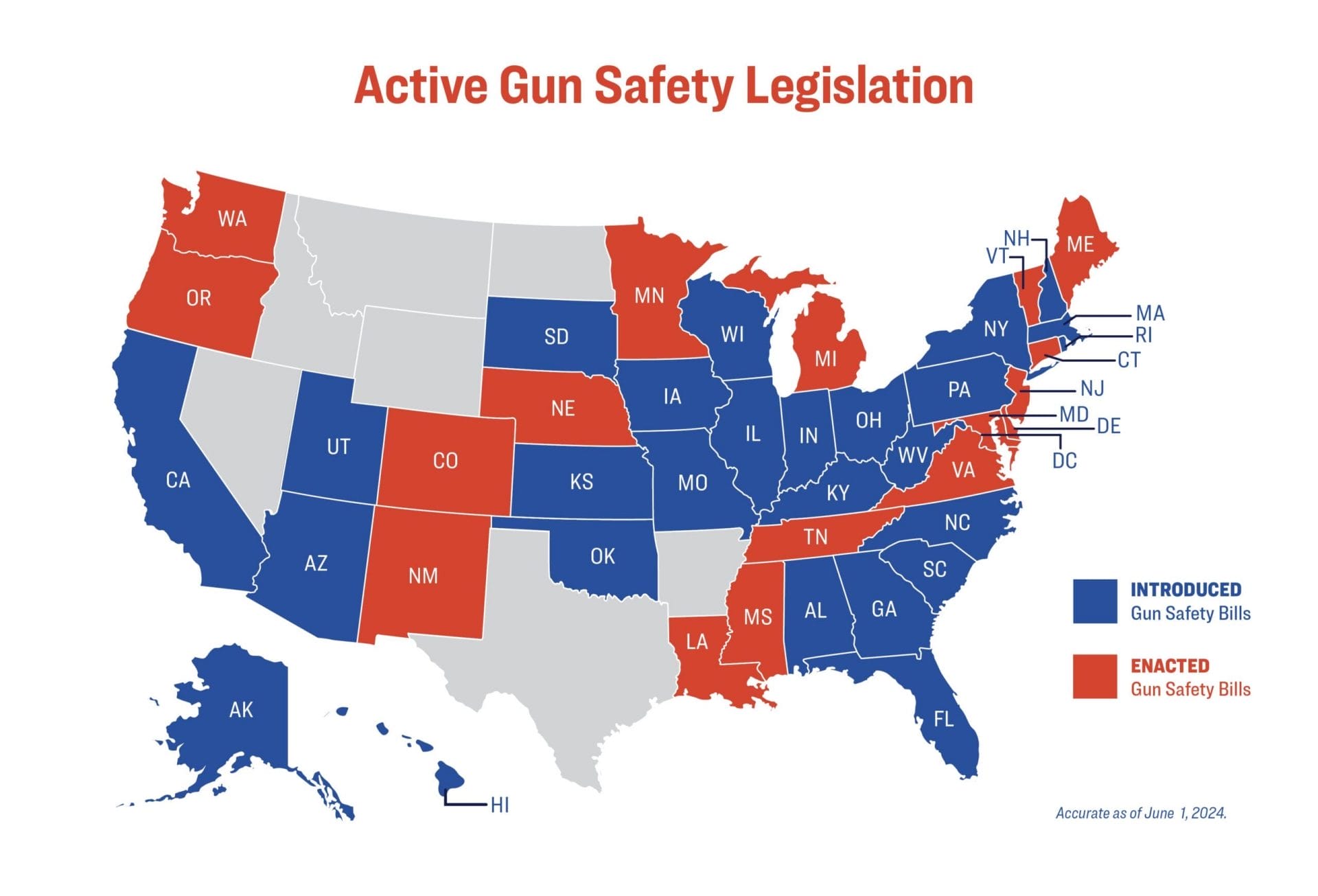
The distribution of updated gun laws by state reveals distinct regional patterns, with certain states leading in comprehensive reform while others have maintained existing frameworks. West Coast states have generally implemented more extensive changes, while other regions have focused on specific aspects of firearm regulation.
Gun Law Changes by State in 2024: Regulatory Activity Intensity
Key Stakeholders Affected
These legislative changes impact multiple stakeholder groups, each facing unique compliance challenges and opportunities. Licensed firearms dealers bear the most immediate burden, with new training requirements, storage obligations, and enhanced notice provisions significantly affecting their operations.
Key Stakeholder Groups and Their 2024 Obligations
- Licensed Firearms Dealers - Must complete mandatory annual training programs, implement enhanced storage security measures, and provide expanded notice requirements to customers about new regulations and safety protocols
- Gun Owners - Face new secure storage mandates in multiple states, required awareness of crisis intervention resources, and updated background check procedures for private transfers
- Law Enforcement Agencies - Must adapt to new protocols for extreme risk protection orders, updated procedures for firearm seizures, and enhanced training on crisis intervention programs
- Mental Health Professionals - Required to understand new reporting obligations, crisis intervention procedures, and their role in extreme risk protection order processes across participating states
- Firearms Instructors and Training Providers - Must update curricula to include new safety requirements, storage education, and state-specific regulatory changes in their certification programs
- Private Sellers - Face expanded background check requirements for private transfers, new documentation obligations, and updated liability provisions in states with universal background check laws
Gun owners themselves face new requirements in several states, particularly regarding storage options and awareness of crisis intervention resources. Law enforcement agencies must adapt to new protocols for temporary storage programs and enhanced dealer oversight responsibilities.
Compliance Considerations
Navigating the complex landscape of new firearm regulations requires careful attention to both federal and state requirements. The interaction between existing federal laws and new state provisions can create compliance challenges that require expert guidance.
Dealers must ensure they understand not only the specific requirements in their state but also how these requirements interact with existing federal regulations. This includes maintaining proper documentation, implementing required training programs, and establishing protocols for new services such as crisis storage.
Looking Ahead
As we examine these significant changes to firearm regulations, it becomes clear that 2024 represents a pivotal year in gun law evolution. The emphasis on dealer training, crisis intervention, and enhanced public safety measures reflects a growing focus on prevention-based approaches to firearm regulation.
In the following sections of this comprehensive analysis, we will examine specific state implementations, provide detailed compliance guidance, and explore the practical implications of these changes for all stakeholders in the firearms community.
Regional Analysis: Western States Lead 2024 Gun Law Changes
The western United States emerged as the epicenter of firearm legislative activity in 2024, with California, Washington, and Oregon implementing some of the most comprehensive new gun laws 2024 has seen. These state firearm regulations reflect a coordinated approach to addressing gun violence while maintaining constitutional protections.
2024 Western States Gun Law Changes Comparison
| State | New Regulation | Effective Date | Key Requirements | Enforcement Agency |
|---|---|---|---|---|
| California | Dealer Training Requirements | July 1, 2024 | Annual DOJ training course and examination for licensed dealers and employees | California Department of Justice |
| California | Assault Weapon Registration Extension | January 1, 2024 | Extended registration period for previously unregistered assault weapons | California Department of Justice |
| Washington | High-Capacity Magazine Ban | July 1, 2024 | Prohibition on sale, manufacture, and import of magazines over 10 rounds | Washington State Patrol |
| Washington | Concealed Carry Training Update | January 1, 2024 | Enhanced training requirements including live-fire proficiency demonstration | Local Law Enforcement |
| Oregon | Permit-to-Purchase System | September 4, 2024 | Background check and safety training required before firearm purchase | Oregon State Police |
| Oregon | Secure Storage Requirements | January 1, 2024 | Mandatory secure storage when minors may access firearms | Local Law Enforcement |
| California | Microstamping Expansion | January 1, 2024 | Extended microstamping requirements for additional handgun models | California Department of Justice |
California's legislative package represents the most extensive overhaul of gun control laws in the state's recent history. The Golden State's new dealer training requirements, effective July 2026, mandate that all licensed firearms dealers and their employees complete annual Department of Justice-developed training courses. This training covers critical topics including crisis intervention, suicide prevention awareness, and proper firearm storage protocols.
The firearm storage services requirement, which took effect January 1, 2024, creates a new safety net for individuals experiencing mental health crises or domestic violence situations. Licensed dealers must now accept firearms for temporary storage when requested by gun owners seeking to prevent access during high-risk periods. While dealers may charge reasonable fees for this service, the law establishes clear protocols for retrieval and storage duration.
Timeline of Western State Gun Law Implementation Dates (2024-2026)
Washington State followed California's lead with its own comprehensive package of updated gun laws by state standards. The state's enhanced background check system now includes mandatory waiting periods for all firearm purchases, extending beyond the federal requirements. Additionally, Washington implemented stricter assault weapon regulations and expanded its extreme risk protection order (red flag) law to include additional categories of petitioners.
Oregon's contribution to the 2024 gun law changes includes groundbreaking permit-to-purchase requirements that establish some of the nation's most rigorous pre-sale screening processes. The state's new law requires completion of a certified training course, background check, and permit issuance before any firearm purchase can proceed.
Impact Assessment: How These Changes Affect Gun Owners
The implementation of these new gun laws 2024 has created a complex landscape for firearm owners, particularly those who travel between states or maintain residences in multiple jurisdictions. Legal compliance now requires careful attention to varying state requirements, storage obligations, and transfer procedures.
For current gun owners, the most immediate impacts include enhanced storage requirements and expanded dealer notification obligations. California's new dealer notices must now include suicide prevention resources and crisis intervention information, reflecting a public health approach to firearm safety. These notices serve as constant reminders of available resources and emergency contacts.
The economic implications of these state firearm regulations extend beyond individual gun owners to affect the entire firearms industry. Dealers face increased operational costs due to training requirements, storage service obligations, and enhanced record-keeping mandates. However, industry analysts suggest these costs may be offset by increased consumer confidence and reduced liability exposure.
Interstate commerce considerations have become particularly complex as these gun control laws create varying standards across state lines. Gun owners traveling between states must now navigate different storage requirements, transport regulations, and documentation standards. The lack of federal uniformity in these areas continues to challenge both law enforcement and legal gun owners.
Legal challenges to several of these 2024 gun law changes remain pending in federal courts, with particular focus on constitutional questions surrounding permit-to-purchase requirements and dealer storage mandates. Second Amendment advocacy groups have filed suits in multiple jurisdictions, arguing that some provisions create undue burdens on constitutional rights.
The effectiveness of these new regulations will likely be measured through comprehensive data collection over the coming years. State agencies are implementing tracking systems to monitor compliance rates, public safety outcomes, and economic impacts. Early indicators suggest strong dealer compliance with training requirements, though comprehensive effectiveness data remains limited due to the recent implementation timeline.
Looking ahead, these western state initiatives may serve as models for other jurisdictions considering similar legislation. The coordinated approach taken by California, Washington, and Oregon demonstrates how states can implement comprehensive firearm safety measures while addressing local concerns and constitutional requirements.
Implementation Timeline and Compliance Guide for 2024 Gun Law Changes
Understanding when new firearm regulations take effect is crucial for gun owners, dealers, and legal professionals. The implementation of 2024 gun law changes follows a complex timeline that varies significantly by state, with some regulations already in effect while others are scheduled for future implementation.
The staggered implementation approach reflects the administrative complexity of these new regulations. States like California have implemented dealer training requirements effective July 2026, while storage service mandates took effect in January 2024. This phased approach allows regulatory agencies time to develop training programs and compliance frameworks.
State-by-State Compliance Requirements
Navigating the varying compliance requirements across states requires careful attention to specific mandates and deadlines. Each state has established unique protocols for implementation, enforcement, and ongoing compliance monitoring.
The compliance landscape becomes particularly complex for multi-state dealers and individuals who travel frequently across state lines. Federal firearms license holders must now track multiple sets of requirements, training schedules, and documentation standards depending on their operational jurisdictions.
Key Compliance Areas Requiring Immediate Attention
Several critical areas demand immediate attention from stakeholders affected by the new gun laws 2024. These requirements span dealer operations, individual ownership responsibilities, and record-keeping obligations.
Dealer training requirements represent one of the most significant operational changes, with states requiring annual completion of specialized courses covering topics ranging from suicide prevention to proper storage protocols. The enhanced dealer notice requirements mandate posting of crisis lifeline information and safety warnings in prominent locations within retail premises.
Impact Assessment and Future Projections
The effectiveness of these updated gun laws by state will likely be measured through various metrics including compliance rates, incident reduction statistics, and administrative efficiency measures. Early implementation data suggests varying levels of compliance across different regions and stakeholder groups.
State firearm regulations implemented in 2024 have created both opportunities and challenges for the firearms industry. While some stakeholders express concerns about increased administrative burdens and compliance costs, others view these changes as necessary steps toward enhanced public safety and responsible gun ownership.
Frequently Asked Questions About 2024 Gun Law Changes
As these new regulations take effect, common questions have emerged regarding implementation, compliance, and enforcement. Understanding these frequently asked questions helps clarify obligations for various stakeholder groups.
The storage service requirements have generated particular interest among dealers and gun owners. California's mandate requiring licensed dealers to accept firearms for temporary storage during crisis periods represents a novel approach to suicide prevention and domestic violence protection.
Regional Variations in Gun Control Laws
The 2024 legislative session highlighted significant regional differences in approaches to firearm regulation. Western states generally implemented more comprehensive measures, while other regions focused on specific aspects such as dealer requirements or storage mandates.
These regional variations create a complex patchwork of regulations that gun owners and dealers must navigate. Interstate commerce and travel considerations become increasingly important as states implement divergent approaches to similar public safety concerns.
Enforcement and Penalties
Understanding enforcement mechanisms and penalty structures is essential for compliance planning. States have established varying approaches to monitoring compliance and addressing violations of the new regulations.
The enforcement landscape includes both administrative penalties and criminal sanctions, depending on the nature and severity of violations. Dealer license revocation, monetary fines, and criminal charges represent the spectrum of potential consequences for non-compliance with updated gun laws by state.
Moving forward, stakeholders should expect continued evolution in both regulatory requirements and enforcement practices as states refine their approaches based on implementation experience and effectiveness data. Regular monitoring of state regulatory updates and compliance guidance will remain essential for maintaining adherence to these dynamic legal frameworks.
No comments yet. Be the first to share your thoughts!