

Federal concealed carry reciprocity
The Constitutional Concealed Carry Reciprocity Act of 2025, designated H.R.38 in the 119th Congress, is currently making its way through the legislative process. The bill aims to allow individuals with concealed carry permits or licenses issued by one state to carry a concealed firearm in any other state that permits concealed carry. This would essentially create a national standard for concealed carry, eliminating the patchwork of differing state laws that currently exists.
The House passed the bill in late 2026, but it is stalled in the Senate. The friction comes from states with strict permitting rules that don't want to recognize permits from states with lower bars for entry. Supporters say it stops travelers from accidentally becoming felons when they cross a state line.
A key component of H.R.38 involves recognizing the validity of state-issued permits. The bill specifies that if a state issues a permit, it must meet certain minimum requirements, like background checks and training. There’s a debate about what those minimums should be, with some arguing they should be uniform across all states and others believing states should retain flexibility. The bill would also establish a process for states to challenge the validity of permits issued by other states, which introduces another layer of complexity.
Expanded red flag laws
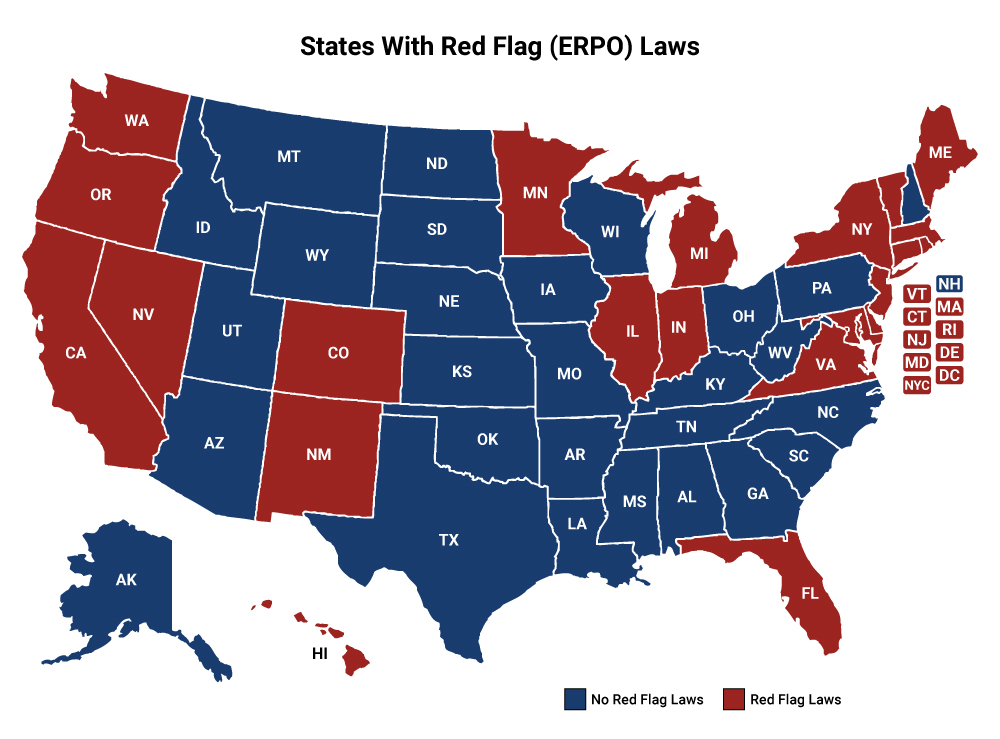
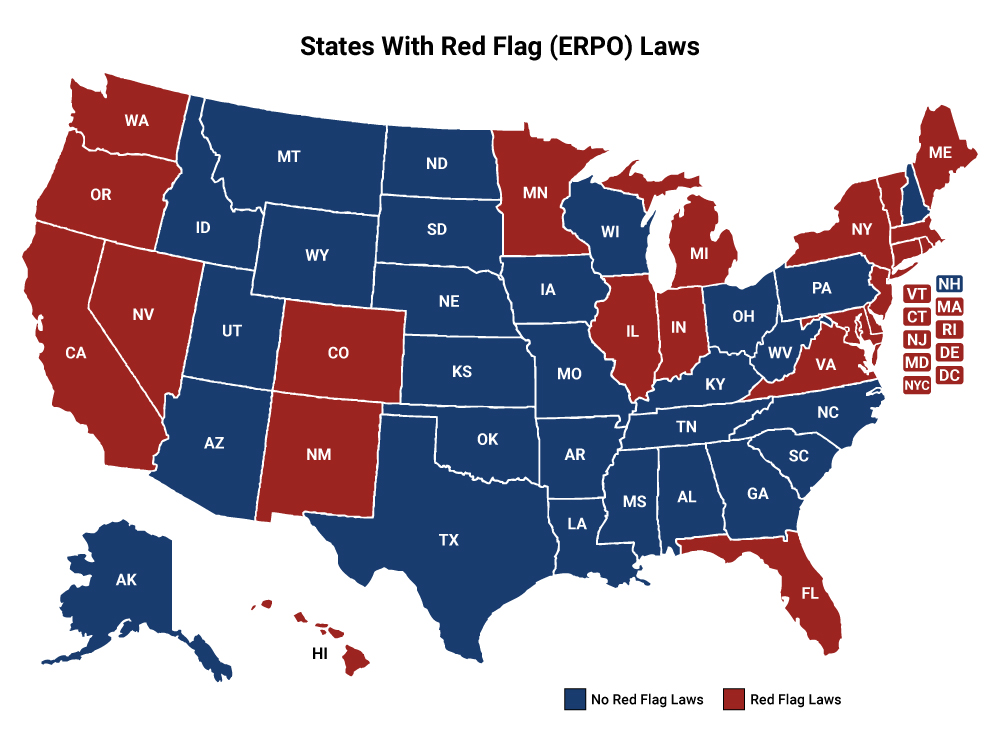
Several states have broadened the scope of their "red flag" laws, formally known as Extreme Risk Protection Orders (ERPOs), in 2026. These laws allow temporary removal of firearms from individuals deemed a danger to themselves or others. States like California, New York, and Washington have made significant changes, lowering the threshold for issuing an ERPO and expanding the range of individuals who can petition for an order.
The expansion of these laws has sparked considerable legal debate, primarily around due process concerns. Critics argue that ERPOs can violate an individual’s Second and Fourteenth Amendment rights without adequate opportunity to defend themselves. There are legitimate worries about false accusations and the potential for abuse, especially given the speed at which these orders can be issued. Several cases are currently challenging the constitutionality of these laws in state and federal courts.
For example, changes in Washington State now allow family members and law enforcement officers to petition for an ERPO based on a "reasonable belief’ of dangerousness. This is a lower standard than previously required. New York’s changes focus on expanding the definition of ‘dangerous" behavior to include threats made online or through social media. These changes, while intended to prevent gun violence, are raising serious questions about balancing public safety with individual rights.
Red Flag Order Requirements: A Comparison of Five States (2026)
| State | Reporting Party | Evidence Required | Hearing Process | Duration of Order | Appeal Process |
|---|---|---|---|---|---|
| California | Law enforcement, immediate family members, employers, school safety personnel | Reasonable suspicion that the individual poses a significant danger to themselves or others, based on articulable facts. Evidence may include threats of violence, recent violent acts, or possession of firearms with a history of mental health issues. | Temporary order issued ex parte (without notice). A full hearing must be held within 14 days. The individual is entitled to legal representation. | Initial order lasts 21 days. Extensions are possible up to one year with further hearings and evidence. | Individual has the right to appeal the order to a higher court. |
| Florida | Law enforcement, family members, and individuals cohabitating with the subject. | Evidence of a credible threat to inflict violence upon themselves or another person. This can include documented statements, concerning behavior, or access to firearms. | Ex parte order initially. A hearing is scheduled within 14 days. The respondent has the right to be present, present evidence, and cross-examine witnesses. | Initial order lasts 14 days, renewable for up to 12 months with continued justification. | The individual can petition the court for a review of the order and may appeal a final decision. |
| Illinois | Law enforcement, family or household members, and healthcare professionals. | Clear and convincing evidence that the individual poses an immediate and present danger of causing substantial bodily harm to themselves or others. Evidence must be specific and credible. | Emergency order issued ex parte. A full hearing must occur within 21 days, providing the individual notice and an opportunity to be heard. | Initial order lasts 14 days, potentially extendable for up to six months with further court review. | The individual has the right to appeal the order to the circuit court. |
| New York | Law enforcement, family members, and school officials. | Evidence that the individual presents a substantial risk of causing harm to themselves or others, based on a pattern of concerning behavior. This may include threats, violent acts, or possession of firearms. | Ex parte order granted if the court finds reasonable cause. A risk protection order hearing is held within 10 days, where the individual can present a defense. | Initial order lasts up to 60 days. Extensions are possible for up to one year with continued evidence. | The individual can appeal the order to a higher court. |
| Texas | Law enforcement | Probable cause to believe the individual poses an imminent threat of committing violence. Evidence must be specific, articulable, and credible. | Ex parte order issued if probable cause is found. A hearing must be held within 14 days, providing the individual notice and an opportunity to contest the order. | Initial order lasts 14 days, with potential for extension up to 30 days with further court review. | The individual has the right to appeal the order. |
Illustrative comparison based on the article research brief. Verify current pricing, limits, and product details in the official docs before relying on it.
Magazine Capacity Limits: New Regulations
A renewed push to restrict magazine capacity has led to new regulations in several states. Colorado and Vermont are among those that have enacted laws limiting magazine capacity to 10 or 15 rounds. These laws are designed to reduce the potential for mass casualties during shootings, but they’ve faced strong opposition from gun rights advocates.
Many of these new laws include grandfathering clauses, allowing individuals who legally owned high-capacity magazines before the law went into effect to keep them – though even these are often subject to strict registration requirements. The specifics vary considerably from state to state, creating a confusing legal landscape for gun owners traveling across state lines.
Legal challenges to these magazine capacity limits are common. Courts have often struck down these laws, citing Second Amendment concerns, but the issue remains contentious. The Supreme Court has yet to rule definitively on the constitutionality of such restrictions, leaving the legal situation in flux.
Universal background checks
The trend towards universal background checks continues, with states like Maine and Nevada expanding their requirements to cover nearly all firearm sales. This means that private sales – those between individuals without a licensed dealer – are now subject to the same background check process as sales at gun stores. The goal is to close loopholes that allow individuals prohibited from owning firearms to acquire them.
These expanded background check systems typically rely on the National Instant Criminal Background Check System (NICS). However, states are experimenting with different methods for facilitating these checks. Some are using online portals, while others are requiring private sales to be conducted through licensed dealers. The effectiveness of these different approaches varies.
One major challenge is ensuring compliance. It’s difficult to track all private sales, and enforcement can be limited. Some states are offering incentives for sellers to comply, while others are imposing penalties for failing to conduct a background check. A checklist of required documentation and procedures is now commonly provided by state police websites.
- Government photo ID
- Completed background check application form
- Proof of residency (in some states)
'Assault Weapon' Bans: Refinements and Challenges
Existing "assault weapon" bans in states like Massachusetts and Connecticut are being refined to address loopholes and clarify definitions. New York is also considering expanding its ban to include a wider range of firearms. These bans typically target semi-automatic rifles with specific features, such as detachable magazines and pistol grips.
The definition of an "assault weapon’ remains a contentious issue. Opponents argue that the term is vague and politically motivated, while proponents insist it"s necessary to prevent mass shootings. The legal battles over these bans are ongoing, with courts frequently weighing in on the constitutionality of specific provisions.
A recent trend is to focus on features rather than specific models. For example, some bans target any semi-automatic rifle with a detachable magazine, regardless of its overall configuration. This approach is intended to be more comprehensive, but it also raises concerns about overreach and the potential for unintended consequences.
Duty to Warn Laws: Expanding Liability?
A number of states are exploring or enacting "duty to warn" laws, which impose a legal obligation on individuals to report potential threats of violence to law enforcement. These laws are inspired by the Tarasoff v. Regents of the University of California case, which established a duty for mental health professionals to warn potential victims of threats made by their patients.
The scope varies by state. Some laws only target doctors, but others now include teachers and bosses. Failing to report a threat can lead to lawsuits or criminal charges. This creates a messy situation where people might over-report out of fear, potentially silencing private conversations.
This is a really tricky area with significant implications for civil liberties. There are concerns about false accusations, the difficulty of accurately assessing threats, and the potential for discrimination. Balancing public safety with individual rights is a major challenge with these laws.
Standout State Changes: Colorado & Maryland
Colorado has enacted some of the most significant gun law changes in 2026. A new law requires background checks for all firearm transfers, including those between family members. The state also expanded its red flag law and increased penalties for illegal gun possession. These changes have been met with strong opposition from gun rights groups, who have vowed to challenge them in court.
Maryland has also seen substantial changes. A new law bans the sale of assault weapons and high-capacity magazines. The state also implemented a waiting period for all firearm purchases and increased funding for gun violence prevention programs. The state’s changes are driven by a desire to reduce gun violence, particularly in urban areas.
The changes in Colorado and Maryland represent a microcosm of the broader trends we’re seeing across the country. These states are at the forefront of the gun control movement, enacting increasingly restrictive laws in response to rising gun violence. A timeline of key legislative actions in each state is available on their respective government websites, providing a detailed look at the evolution of these laws.
No comments yet. Be the first to share your thoughts!