

Red flag laws at a glance
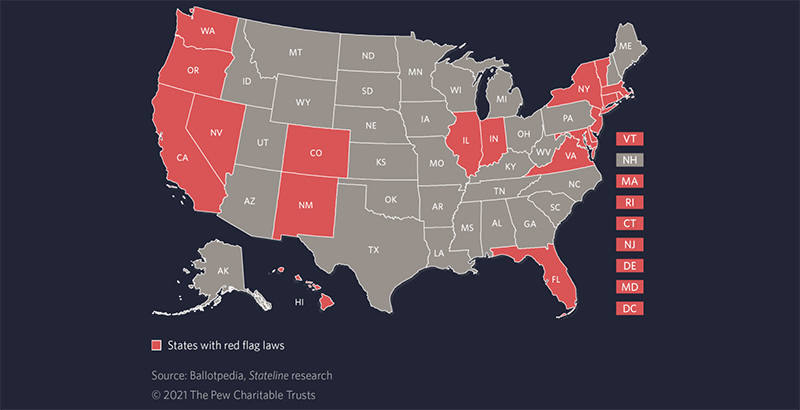
Red flag laws, or Extreme Risk Protection Orders (ERPOs), allow courts to temporarily seize firearms from people deemed a danger to themselves or others. Nineteen states and D.C. currently use these orders to intervene before a crisis turns violent.
The legal basis for these laws is complex, and they’ve become a focal point in the ongoing debate about gun control. Concerns about due process – ensuring fair treatment under the law – and Second Amendment rights are central to the opposition. Proponents argue that ERPOs are a necessary tool to protect communities, while opponents view them as a potential violation of constitutional rights.
Since 2018, the number of states with some form of red flag legislation has grown considerably. What began as a concept in a handful of states is now a feature of the legal landscape in more than 20, and the discussion continues to unfold in state legislatures across the country. This isn’t a static situation; the laws themselves, and the debate surrounding them, are constantly evolving.
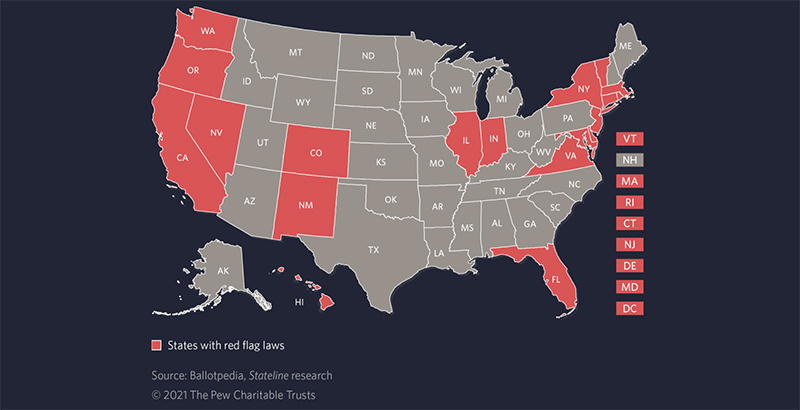
State-by-state ERPO status in 2026
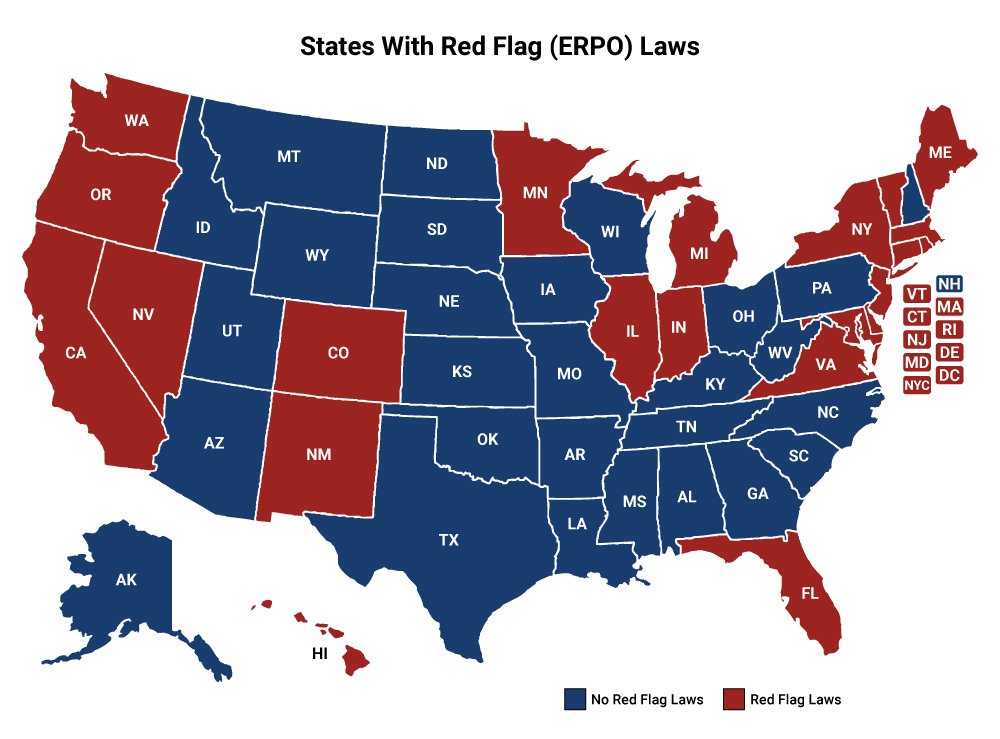
By late 2026, the map of ERPO adoption shows a sharp divide between coastal and interior states. While 21 jurisdictions have active statutes, several others have passed 'anti-red flag' laws to block local enforcement.
States with ERPO laws: California, Colorado, Connecticut, Delaware, Florida, Hawaii, Illinois, Indiana, Maryland, Massachusetts, New Jersey, New Mexico, New York, Oregon, Rhode Island, Vermont, Virginia, Washington, and the District of Columbia all have operational red flag laws. The specifics differ – who can petition, the duration of orders, and appeal processes – but the core principle of temporary firearm removal is consistent. For example, Indiana’s law, enacted in 2022, allows law enforcement to petition a court.
States considering ERPO laws: Several states are currently debating legislation related to red flag laws. In Texas, House Bill 1234 is under consideration, aiming to allow law enforcement to petition for ERPOs. Similar bills are being debated in Georgia and South Carolina, though their prospects are uncertain given the political climate. These bills often face strong opposition from gun rights advocates.
States without ERPO laws (and actively opposing them): A significant number of states remain firmly opposed to red flag laws. These include Alabama, Alaska, Arizona, Idaho, Kansas, Kentucky, Louisiana, Mississippi, Missouri, Montana, Nebraska, Nevada, North Carolina, North Dakota, Oklahoma, South Dakota, Tennessee, Texas, Utah, West Virginia, and Wyoming. Many of these states have passed resolutions or legislation specifically prohibiting the implementation of ERPOs. Some, like Arizona, have actively worked to nullify federal attempts to encourage adoption.
The nuances within each state are important. California's law, for instance, is quite broad, allowing family members, household members, and employers to petition. In contrast, Virginia’s law initially faced challenges regarding due process, leading to amendments aimed at strengthening procedural safeguards.
Red Flag Laws by State - 2026 Status
| State | ERPO Law Status | Petitioners Allowed | Order Duration | Appeal Process | State Law Link |
|---|---|---|---|---|---|
| California | Yes | Law Enforcement, Immediate Family | Up to one year | Respondent can petition the court for a hearing within a specified timeframe. | https://leginfo.legislature.ca.gov/faces/codes_displaySection.xhtml?lawCode=WIC§ionNum=6580.1 |
| Florida | Yes | Law Enforcement, Family | Initial 14 days, extendable to 1 year | Respondent has the right to a hearing and can present evidence. | http://www.leg.state.fl.us/statutes/index.cfm?App_mode=DisplayStatute&StatuteID=790.145 |
| Illinois | Yes | Law Enforcement, Family | Initial 14 days, extendable to 6 months | Respondent can file a motion to contest the order. | https://www.ilga.gov/legislation/ilcs/ilcs4/735ILCS5/735ILCS5.htm |
| Maryland | Yes | Law Enforcement, Qualifying Family Members | Initial 7 days, extendable to 6 months | Respondent is entitled to an expedited hearing. | https://mga.maryland.gov/mgawebsite/Legislation/Details/HB1302?ys=2023RS |
| New York | Yes | Law Enforcement, Family | Up to one year | Respondent has the right to challenge the order in court. | https://www.nysenate.gov/legislation/laws/GCL/700-c |
| Texas | No | N/A | N/A | N/A | N/A |
| Indiana | No | N/A | N/A | N/A | N/A |
| Vermont | Pending | Law Enforcement | To be determined | To be determined | N/A |
Illustrative comparison based on the article research brief. Verify current pricing, limits, and product details in the official docs before relying on it.
Who can file a petition?
One of the most debated aspects of red flag laws is who is authorized to petition a court for an Extreme Risk Protection Order. The rules vary significantly from state to state, and this is often a key point of contention. Some argue that broader access is crucial for effective intervention, while others believe it could lead to abuse.
Currently, the most common model restricts petitioning authority to law enforcement. This means a police officer or sheriff must initiate the process based on their assessment of the individual’s risk. However, a growing number of states are expanding access to include family members, household members, and even school administrators. This expansion is intended to allow those closest to the individual to raise concerns when they see warning signs.
States like Connecticut and New Jersey allow family members to petition, recognizing that they may be the first to notice concerning behavior. This is a significant shift from the law enforcement-only model. However, critics argue that allowing family members to petition could lead to frivolous or retaliatory petitions, potentially violating the individual’s rights. Recent changes in Maryland have broadened access to include mental health professionals, reflecting a desire to incorporate expert opinions.
How courts define extreme risk
For a court to issue an ERPO, petitioners must present evidence demonstrating that the individual poses a significant risk of causing harm to themselves or others. This isn’t a simple standard to meet, and the types of evidence considered vary by state. Courts generally look for a pattern of behavior, not just a single incident.
Commonly cited triggers include direct or indirect threats of violence. This could involve statements expressing intent to harm someone, or even concerning social media posts. Recent acts of violence, such as domestic violence incidents, are also strong indicators. Possession of firearms while experiencing a mental health crisis is another frequently cited factor, as is reckless gun storage, particularly when children are present.
The standard of proof required also varies. Some states require probable cause, meaning a reasonable belief that the individual poses a risk. Others require a preponderance of the evidence, a lower standard that means it’s more likely than not that the individual is a danger. Courts will also consider evidence of substance abuse, particularly if it’s linked to violent behavior. It’s important to note that I am not a legal expert, and this is a summary of general trends.
- Specific threats of violence against others or self
- Recent acts of violence
- Possession of firearms during a mental health crisis
- Reckless gun storage
- Substance abuse
Due Process and Second Amendment Challenges
Red flag laws have faced numerous legal challenges, primarily centered around concerns about due process and the Second Amendment. Opponents argue that these laws violate an individual’s right to bear arms, as guaranteed by the Second Amendment, and that they do so without adequate procedural safeguards.
The due process concerns focus on the lack of notice and opportunity to be heard before firearms are removed. Critics argue that individuals should have a chance to defend themselves before their weapons are taken away, not after. Some laws have been amended to address these concerns by requiring expedited hearings and providing legal representation.
The Preventing Unjust Red Flag Laws Act of 2025 (H.R.223) reflects these concerns. This proposed federal legislation aims to strengthen due process protections in red flag laws, including requiring a higher standard of evidence and ensuring access to legal counsel. The outcome of this legislation is uncertain, but it highlights the ongoing debate about the balance between public safety and individual rights. Several court cases are also working their way through the system, challenging the constitutionality of these laws.
Measuring the impact on suicide and crime
Assessing the impact and effectiveness of red flag laws is challenging. It’s difficult to establish a direct causal link between the implementation of these laws and a reduction in gun violence or suicide rates. However, some preliminary data offers insights.
Research from Everytown Research & Policy suggests that states with red flag laws have seen a reduction in firearm suicides. However, the study also acknowledges that other factors may be at play. Establishing causation requires more rigorous research and long-term data collection. It’s also important to consider that the laws are often implemented in conjunction with other gun violence prevention measures, making it difficult to isolate their specific impact.
Studies examining the effect of ERPOs on mass shootings are similarly inconclusive. While some argue that these laws could have prevented certain tragedies, it’s impossible to know for sure. The data is limited, and the circumstances surrounding each incident are unique. More research is needed to fully understand the potential of red flag laws to prevent gun violence.
No comments yet. Be the first to share your thoughts!