
Firearm Background Check Landscape
The National Instant Criminal Background Check System, or NICS, is the foundation of firearm background checks in the United States. Established by the Brady Handgun Violence Prevention Act of 1993, NICS is managed by the FBI and used by Federal Firearms Licensees (FFLs) to determine if a prospective buyer is prohibited from possessing a firearm. However, NICS doesn’t cover all gun sales; it primarily applies to transactions with licensed dealers.
A "universal’ background check, a term often used in political and public discourse, isn’t a precisely defined legal standard. It generally refers to laws requiring background checks for all firearm transfers, closing what advocates call loopholes that allow private sales to occur without a check. The concept emerged as a response to the limitations of the original Brady Act, which didn"t address private sales.
Initially, federal law didn’t require any background checks. The 1993 Act mandated checks through licensed dealers, but significant gaps remained. Over time, states began to enact their own laws to expand background check requirements, leading to a patchwork of regulations across the country. It's important to understand that the definition of 'universal' varies considerably from state to state, impacting the scope of background check requirements.
States Requiring Universal Checks
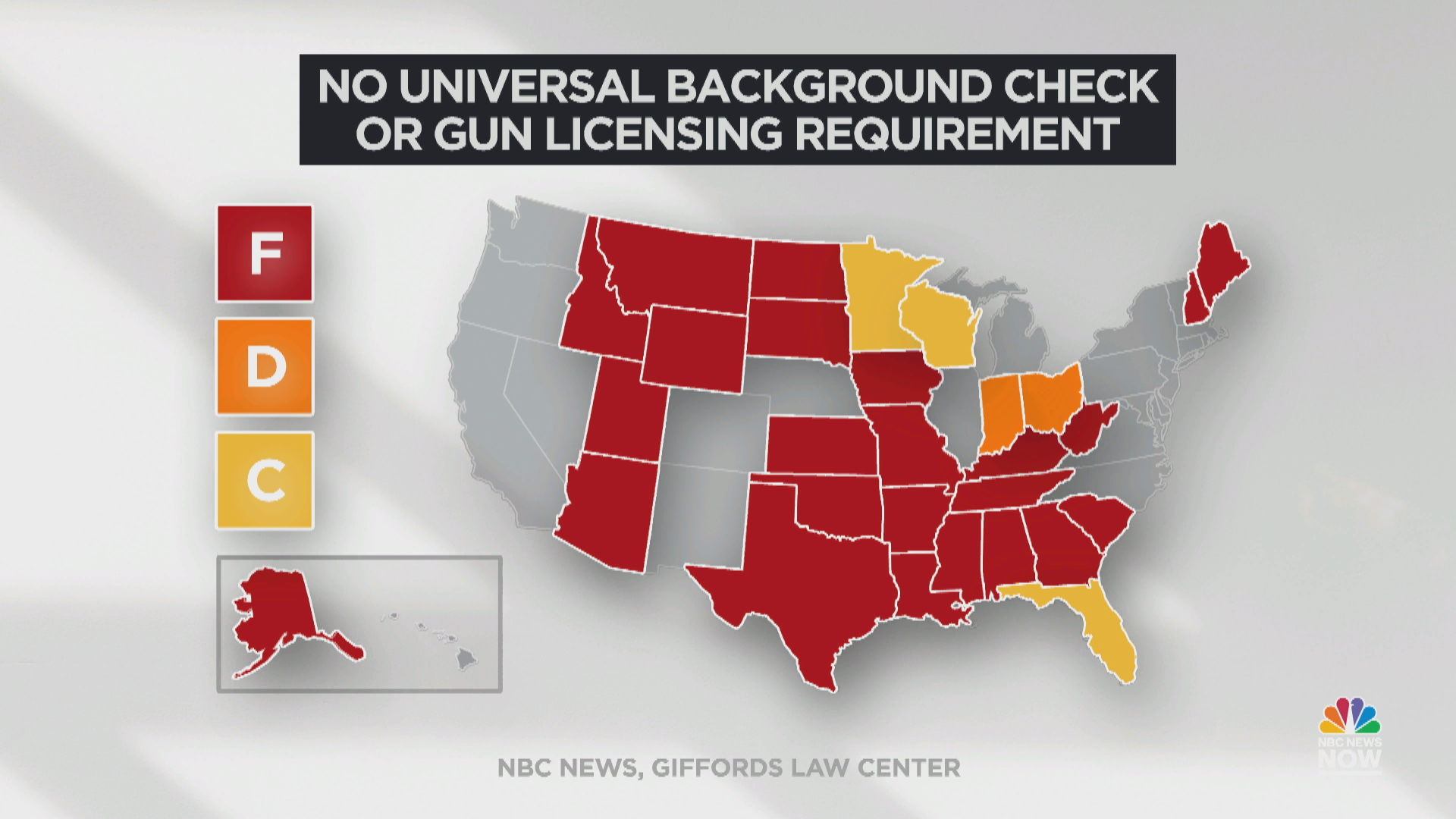
As of late 2026, several states have enacted laws aiming for what is commonly understood as "universal" background checks. These states generally require a NICS background check for nearly all firearm transfers, including private sales and those occurring at gun shows. However, the specifics vary.
California (Penal Code Sections 27500-27510) requires a background check through a licensed dealer for all firearm sales and transfers. Private Party Transfers (PPTs) must be processed through a licensed gun dealer, and the dealer performs the background check. Exemptions are limited, primarily for law enforcement and certain family transfers registered with the state.
Colorado (Colorado Revised Statutes 18-12-109) requires all firearm transfers, including those between private individuals, to be processed through a licensed dealer who initiates a background check. There is a mandatory three-day waiting period following the background check. Certain temporary transfers for hunting or shooting competitions are exempt.
Connecticut (Connecticut General Statutes 29-36f) mandates that all firearm sales and transfers, including private sales, go through a licensed dealer. The dealer is responsible for conducting a background check through the state’s system, which utilizes NICS data. Exemptions exist for law enforcement officers and certain family transfers.
Delaware (Delaware Code Title 16, Chapter 129) requires all firearm sales, including private sales, to be processed through a licensed dealer who conducts a background check. The state does not have a waiting period beyond the time required to complete the check. Transfers to immediate family members are exempt.
Hawaii (Hawaii Revised Statutes 134-3) requires background checks for all firearm sales and transfers, conducted through the state attorney general's office. Private transfers must be approved by the attorney general and involve a waiting period. There are very limited exemptions, mostly for law enforcement.
Maryland (Maryland Public Safety Article, Section 5-133) requires a background check for all firearm transfers, including private sales. Transfers must be processed through a licensed dealer. Maryland also has a seven-day waiting period for most firearm purchases.
Massachusetts (Massachusetts General Laws Chapter 140, Section 131) requires a background check through a licensed dealer for all firearm sales and transfers. Private sales must be conducted through a licensed dealer, and the state requires a Firearm Identification Card (FID) for possession. Exemptions are limited.
New Jersey (New Jersey Statutes 2C:58-3) requires background checks for all firearm sales and transfers, including private sales. The state uses its own background check system, which is integrated with NICS. A waiting period applies to most purchases.
New York (New York Penal Law Article 265) requires background checks for all firearm sales and transfers, conducted through a licensed dealer. New York has a particularly stringent licensing process and a mandatory waiting period. Exemptions are minimal.
Oregon (Oregon Revised Statutes 166.420) requires background checks for all firearm transfers, including private sales. Transfers must be processed through a licensed dealer. The state also has a waiting period.
Rhode Island (Rhode Island General Laws 11-27-2.2) requires background checks for all firearm sales and transfers, including private sales, which must be processed through a licensed dealer.
Vermont (13 V.S.A. § 4004) While historically known for its permissive gun laws, Vermont now requires background checks for private firearm sales, conducted through a licensed dealer. This change came about in 2018.
Washington (Revised Code of Washington 9.41.110) requires background checks for all firearm sales and transfers, including private sales. The state utilizes a licensed dealer to process the check.
States with Partial Restrictions
A number of states don’t have "universal" background check laws but do impose some restrictions on private firearm sales. These restrictions often aim to address the loopholes exploited in states without comprehensive laws.
Iowa requires private sellers to be a licensed dealer if they regularly engage in firearm sales. Otherwise, no background check is required. This creates a gray area, as the definition of “regularly” is open to interpretation. The law doesn’t prevent individuals from occasionally selling firearms without a license.
Kansas requires private sellers to be licensed dealers if they are 'engaged in the business' of selling firearms. The state doesn’t define 'engaged in the business' clearly, leading to ambiguity. Sales between family members are generally exempt.
Minnesota requires a background check for transfers of handguns, but not for rifles or shotguns, unless the seller is a licensed dealer. This creates a significant loophole for long gun sales. Private sales of handguns must be processed through a licensed dealer.
Nebraska requires private sellers to be licensed dealers if they are considered to be 'engaged in the business' of selling firearms. The state offers a voluntary background check system for private sales, but it’s not mandatory.
North Carolina does not require a background check for most private firearm sales. However, certain convicted felons are prohibited from possessing firearms, and it’s illegal to knowingly sell a firearm to someone prohibited by law. This relies on the seller’s knowledge and diligence.
States with Minimal Restrictions
Many states have very few restrictions on private firearm sales, meaning individuals can generally buy and sell firearms without a background check. These states are often criticized by gun control advocates for facilitating the illegal transfer of firearms to prohibited persons.
Alaska, Arizona, Idaho, Kentucky, Louisiana, Mississippi, Missouri, Montana, New Hampshire, North Dakota, Oklahoma, South Carolina, South Dakota, Tennessee, Texas, Utah, West Virginia, and Wyoming generally allow private firearm sales without a background check. While federal law still applies – meaning prohibited persons are still prohibited from possessing firearms – there’s no state-level mechanism to verify a buyer’s eligibility.
It's important to note that even in these states, it is illegal to knowingly sell a firearm to someone prohibited by federal law. However, the burden of knowing that information falls entirely on the seller.
Federal Loopholes and Potential Changes
At the federal level, two significant loopholes continue to undermine the effectiveness of background checks: the gun show loophole and the private sale loophole. The gun show loophole allows individuals to purchase firearms from unlicensed sellers at gun shows without undergoing a background check. Because these sellers aren’t licensed, they aren’t required to conduct NICS checks.
The private sale loophole allows individuals to sell firearms to other individuals without going through a licensed dealer, and therefore without a background check. This loophole is often exploited by individuals seeking to avoid the background check process. Currently, federal law doesn't require a background check for private sales unless the seller is a licensed dealer.
Numerous legislative proposals have been introduced in Congress to close these loopholes, most notably the Bipartisan Background Checks Act of 2023. This bill would require background checks for all firearm sales, including those between private individuals, with limited exceptions. However, the bill has faced significant opposition and has stalled in Congress. The arguments against expanding background checks typically center on Second Amendment rights and concerns about government overreach.
Reciprocity and Interstate Sales
The interaction of state laws regarding background checks and interstate gun sales is complex. Generally, someone purchasing a firearm in a state with universal background checks must comply with that state’s laws, regardless of where they reside. However, transporting a firearm across state lines raises additional legal considerations.
If someone purchases a firearm legally in one state and then travels to another state with more restrictive laws, they may be violating the laws of the second state if they don’t comply with its requirements. This could include registering the firearm or obtaining a permit. The legal implications of interstate transport depend on the specific laws of both states.
The Firearm Owners Protection Act (FOPA) generally allows individuals to transport firearms across state lines for lawful purposes, such as hunting or competition, as long as they comply with the laws of any states they pass through. However, FOPA doesn’t override state laws requiring background checks for all firearm transfers.
Looking Ahead: 2026 and Beyond
The future of universal background check laws remains uncertain. Several states are considering legislation to expand background check requirements, while others are likely to resist further restrictions. Federal action on this issue is particularly challenging, given the deep political divisions surrounding gun control.
Emerging technologies, such as improved NICS databases and faster background check processing times, could potentially enhance the effectiveness of background check systems. However, these technologies are unlikely to be implemented without significant investment and political will. It's reasonable to expect continued legal challenges to existing and proposed background check laws, as both sides of the debate seek to advance their positions.
No comments yet. Be the first to share your thoughts!