

The reality of moving guns across state lines
Interstate firearm transport is a surprisingly complex legal area. It’s not as simple as owning a gun legally in one state and assuming you can take it anywhere else. The core of the difficulty lies in the tension between the Second Amendment right to bear arms and the principle of state sovereignty, which allows each state to regulate firearms within its borders.
This creates a patchwork of laws across the country, with significant variations in what’s permitted. A firearm legally possessed in Texas might be illegal in New York, and the rules for transporting that firearm through restrictive states add another layer of complication. It’s a situation demanding careful planning and awareness.
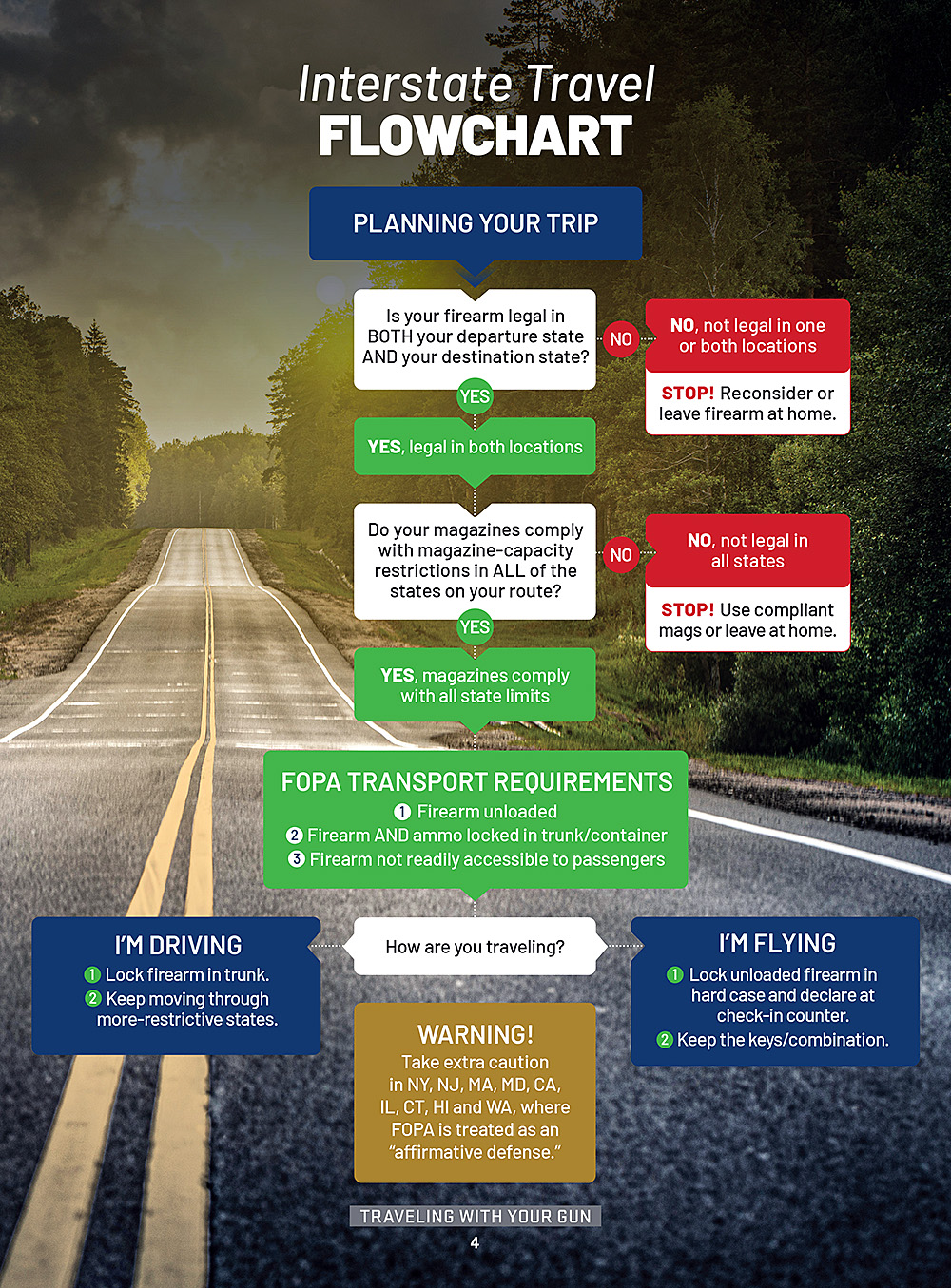
The Firearm Owners Protection Act (FOPA) of 1986 provides a 'safe passage' provision, but it isn't a get-out-of-jail-free card. While it protects you if you're traveling between two places where possession is legal, local police in states like New Jersey or Maryland often ignore these federal protections during traffic stops, leaving you to argue your case in court later.
As of late 2026, the situation is constantly evolving. Court decisions, legislative changes, and executive actions can all impact firearm transportation laws. What’s accurate today might not be tomorrow, which is why staying informed is absolutely essential. This overview provides a snapshot of the current legal landscape, but it's no substitute for thorough research and, when necessary, legal counsel.
What federal law actually covers
The primary federal statute governing interstate firearm transport is 18 U.S.C. § 926A. This law focuses on regulating the transportation of firearms in interstate commerce – meaning when a firearms dealer is involved in the shipment. It doesn’t directly address the situation of a private citizen traveling with their firearms.
Crucially, § 926A doesn't create a general right to transport firearms across state lines. It primarily regulates licensed firearms dealers and sets requirements for them to ship firearms legally. The law does have implications for individuals, however, through the 'otherwise lawful' clause.
This clause essentially states that a firearm can be transported across state lines as long as it’s being transported legally under both federal and state law. But what constitutes 'otherwise lawful' is often subject to interpretation. If a firearm is legal to possess in the origin and destination states, but illegal to transport through a restrictive state, the situation becomes murky.
Individuals traveling through states with stricter gun laws need to be particularly cautious. Even if they’re legally compliant in their origin and destination states, they could face charges in a restrictive state if they violate that state's transportation laws. Federal law doesn’t offer much protection in these scenarios, and state laws will generally take precedence.
Permissive vs. restrictive states
States fall along a spectrum when it comes to firearm transport regulations. We can broadly categorize them into three groups: generally permissive, moderate, and highly restrictive. Understanding where a state falls on this spectrum is the first step in planning any interstate travel with firearms.
Generally Permissive States typically have minimal restrictions on firearm transport. States like Arizona, Alaska, and Wyoming generally allow individuals to transport firearms legally possessed in their origin state, often with few requirements beyond keeping the firearm unloaded and secured. They tend to respect the rights of travelers and prioritize the Second Amendment.
Moderate States require more awareness of the law but generally allow transport with compliance. States like North Carolina and Tennessee may require firearms to be transported unloaded and in a locked container, and may have restrictions on magazine capacity or certain types of firearms. These states strike a balance between protecting Second Amendment rights and regulating firearms.
Highly Restrictive States impose significant limitations or outright prohibitions on firearm transport. California, New York, and Massachusetts are examples of states with strict gun control laws. They may require permits for transport, prohibit certain types of firearms, or have stringent requirements for unloading and casing. Transporting a firearm through these states can be particularly challenging.
Interstate Gun Transport Laws 2026: State Categorization & Key Requirements
| State | Category | Key Restrictions/Requirements | Notes |
|---|---|---|---|
| Alabama | Permissive | Generally allows the transport of firearms in accordance with federal law (18 U.S.C. § 926A). Individuals should ensure firearms are unloaded and inaccessible during transport. | Alabama generally defers to federal law regarding interstate transport. |
| California | Restrictive | Highly regulated. Requires firearms to be transported unloaded and in a locked container. Transport is limited to direct routes between points of origin and destination. Certain firearms are prohibited. | California has some of the strictest gun laws in the nation, impacting transport significantly. |
| Florida | Moderate | Allows transport of firearms if the individual has a valid concealed carry permit or if the firearm is unloaded and securely encased. Compliance with federal law is required. | Florida recognizes permits from many other states, easing transport for non-residents in some cases. |
| Texas | Permissive | Generally allows the transport of firearms in accordance with federal law. Firearms must be transported unloaded and either in a locked container or a separate compartment inaccessible to the driver and passengers. | Texas is generally considered a Second Amendment-friendly state. |
| New York | Restrictive | Requires firearms transported into the state to be unloaded and encased. Individuals must comply with New York’s stringent firearm laws, which may include registration requirements depending on the firearm. | New York’s laws are complex; travelers should research thoroughly before entering the state with a firearm. |
| Arizona | Permissive | Allows transport of firearms in accordance with federal law. No permit is required. Firearms must be transported unloaded and inaccessible from the passenger compartment. | Arizona generally respects the right to bear arms and has minimal restrictions on transport. |
| Illinois | Moderate | Requires firearms transported into Illinois to be unloaded and encased. Individuals must comply with Illinois’s firearm ownership laws, including potential registration requirements. | Illinois has varying rules depending on whether the traveler is a resident or non-resident. |
| Pennsylvania | Moderate | Generally allows transport of firearms in accordance with federal law. Firearms must be transported unloaded and in a locked container. Restrictions apply within certain areas, such as Philadelphia. | Pennsylvania’s laws can vary by locality; travelers should be aware of local ordinances. |
Illustrative comparison based on the article research brief. Verify current pricing, limits, and product details in the official docs before relying on it.
Key State-Level Regulations
State-level regulations governing firearm transport vary widely, but some common themes emerge. Understanding these regulations is crucial for avoiding legal trouble. One of the most common requirements is that firearms must be transported unloaded and cased. This means the firearm must be unloaded of all ammunition, and stored in a locked container.
Many states also have magazine capacity limits. For example, California restricts magazines to 10 rounds, while other states have no such limitations. If you’re traveling with a firearm that has a high-capacity magazine, you might need to leave it behind or modify it to comply with the laws of your destination or any states you’ll be transiting.
Prohibited firearms are another important consideration. Some states ban certain types of firearms, such as assault weapons or short-barreled rifles. Transporting a prohibited firearm into a state, even for temporary transport, can result in criminal charges. It is essential to check the laws of each state you will be traveling through.
Some states require a background check for temporary transport, even if you’re a law-abiding citizen with a valid firearm license in your home state. This is particularly common in states with strict gun control laws. The requirements can be complex, so it's best to research them carefully.
The duty to inform law enforcement is another regulation to be aware of. Some states require individuals to notify law enforcement if they’re transporting a firearm, even if they’re otherwise legally compliant. Failing to do so can result in fines or even arrest. Understanding the 'castle doctrine' and reciprocity agreements is also crucial. The castle doctrine pertains to self-defense in your home, while reciprocity agreements determine which states recognize each other's concealed carry permits.
Even a seemingly minor violation of firearm transportation laws can lead to serious legal consequences, including fines, imprisonment, and the loss of your right to own firearms. It’s simply not worth the risk of assuming you’re compliant – do your research and be prepared.
Traveling *Through* Restrictive States
Traveling through a restrictive state presents a unique challenge. If you’re legally transporting a firearm in a permissive state but need to drive through a restrictive one, you need to be extra careful. The key concept here is the 'direct route' requirement.
The 'direct route' requirement generally means that you must travel on the shortest, most direct route between your origin and destination, without making any unnecessary stops in the restrictive state. However, the interpretation of 'direct route' can vary, and some states are more lenient than others. It's best to err on the side of caution.
If you have to drive through a state with strict bans, don't linger. Stopping for a hotel stay or a long dinner can strip away your federal 'safe passage' protections. I've seen cases where a simple flat tire in a restrictive jurisdiction turned a legal trip into a felony charge. Fill up your gas tank before you cross the state line and keep moving until you're out.
Documenting your route can also be helpful. Keep a record of your travel dates, times, and locations, and be prepared to demonstrate that you were traveling on a direct route. While it doesn't guarantee immunity, it can show your intent to comply with the law.
TSA and Airline Transport
Transporting firearms on an airplane is subject to strict regulations set by the Transportation Security Administration (TSA). You can find the latest guidelines on the TSA website (tsa.gov). Airline transport is significantly more regulated than personal vehicle transport.
The primary requirement is that firearms must be declared to the airline at check-in. You must inform the airline representative that you’re traveling with a firearm and present the firearm unloaded and in a hard-sided, locked case. The firearm must not be accessible during the flight.
Ammunition must also be declared and transported in a separate, locked container. There are limits on the quantity of ammunition you can transport, and certain types of ammunition may be prohibited. Check with your airline for specific restrictions.
Violating TSA regulations can result in significant penalties, including fines, arrest, and the loss of your right to fly. It’s crucial to follow the rules carefully and be prepared to cooperate with TSA agents. Failing to do so can have serious consequences.
Where to check for updates
Firearm laws are constantly changing, so it’s essential to stay informed. Several resources can help you stay up-to-date. State attorney general websites are a good starting point, as they often publish information about state gun laws.
The Bureau of Alcohol, Tobacco, Firearms and Explosives (ATF) also provides information about federal firearm regulations. Organizations like the National Rifle Association (NRA) and Gun Owners of America (GOA) offer resources and updates on firearm laws across the country.
However, it’s important to verify information with official sources. Don’t rely solely on internet forums or social media for legal advice. Always check the official websites of state and federal agencies.
For those facing charges related to firearm transport, it’s crucial to seek legal counsel from a qualified attorney. An attorney can advise you on your rights and options and help you navigate the legal system. Remember, this information is for general guidance only and should not be considered legal advice.

No comments yet. Be the first to share your thoughts!