

Current permitless carry states
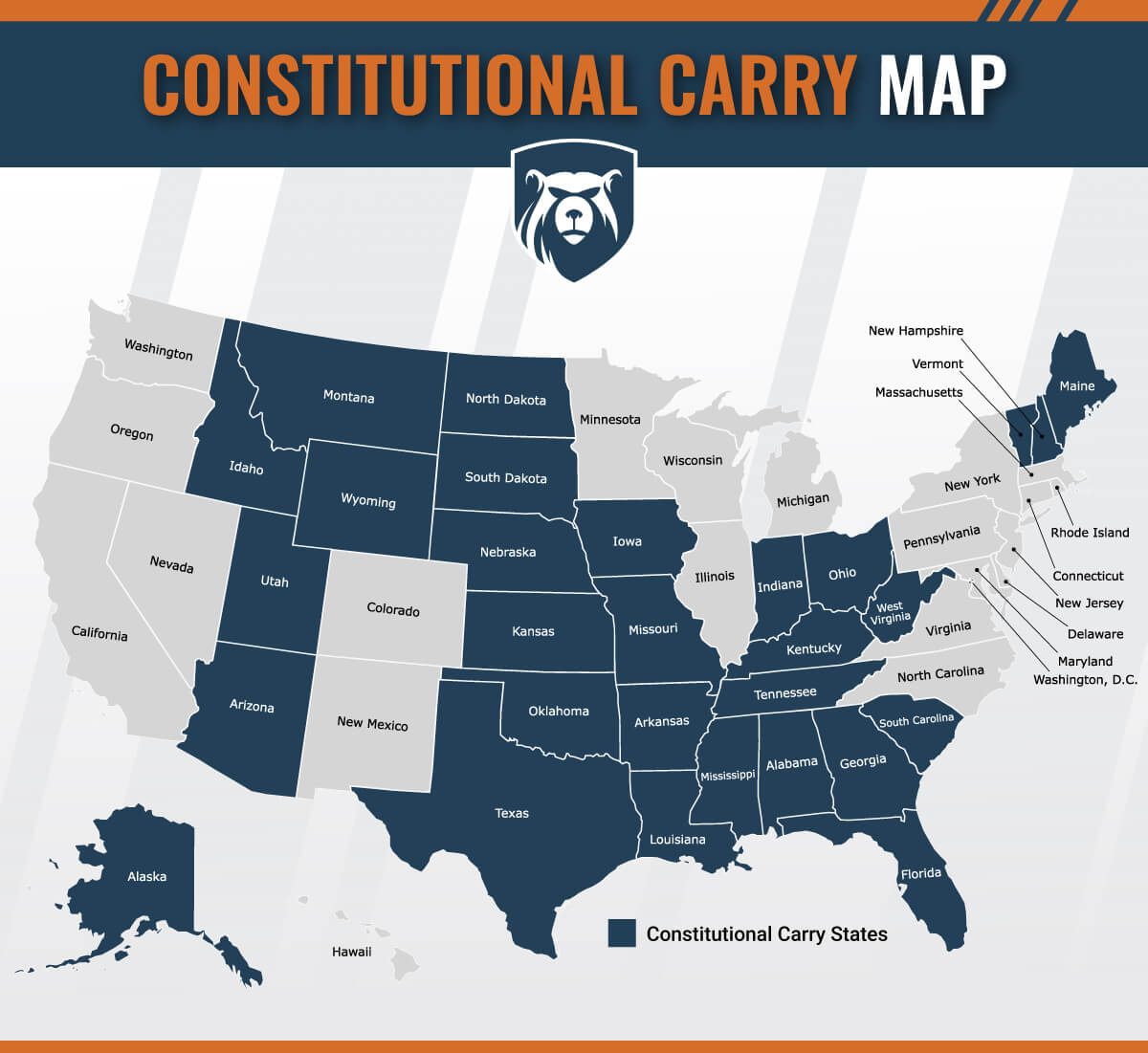
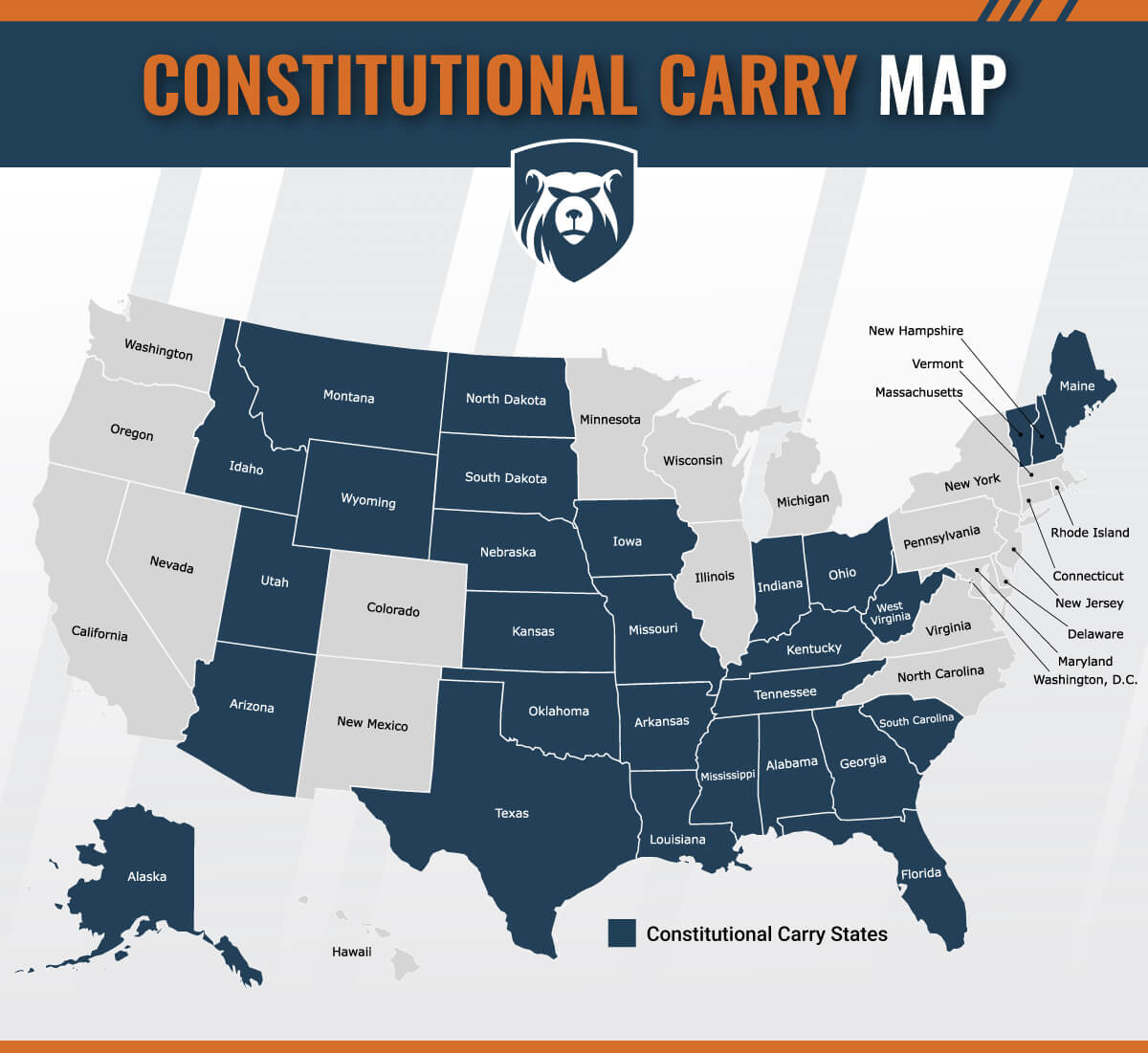
By late 2026, 28 states have permitless carry laws on the books. These rules aren't identical. Every state has its own quirks regarding age limits and where you can actually take a gun. If you're crossing state lines, you need to know the specific boundaries of the state you're entering.
Alabama: Adopted constitutional carry in 2022. Individuals 21 and over can carry a concealed handgun without a permit, but must present identification upon request by law enforcement. Certain locations, like schools and courthouses, remain prohibited. Alaska: Has allowed permitless carry since 1968, making it one of the earliest adopters. There are no specific age or training requirements, but carrying while intoxicated is prohibited.
Arizona: Permitless carry went into effect in 2021. Individuals can carry a concealed handgun without a permit, but are still subject to existing laws regarding prohibited persons (felons, those with domestic violence convictions, etc.). Arkansas: Became a constitutional carry state in 2021. The law generally allows anyone 21 or older to carry a concealed handgun without a permit, but restricts carry in certain locations like police stations and correctional facilities.
Colorado: Surprisingly, Colorado passed permitless carry in 2023, despite a historically restrictive stance on gun control. There are some limitations, including a requirement for individuals to be able to legally possess a firearm. Florida: Florida’s law, enacted in 2023, allows individuals 21 and over to carry a concealed handgun without a permit, but requires completion of a firearms training course. Georgia: Adopted constitutional carry in 2022, allowing those 21 and older to carry concealed without a permit, with restrictions on locations like schools and government buildings.
Idaho: Permitless carry has been the law in Idaho since 2014. No permit is required to carry a concealed or open handgun. Indiana: Became a constitutional carry state in 2022. The law allows individuals 18 and older to carry a handgun without a permit, but maintains restrictions on carrying in certain locations. Iowa: Adopted permitless carry in 2021. Individuals 21 and over can carry a handgun without a permit, but must present identification if asked by law enforcement.
Kansas: Permitless carry went into effect in 2022. Individuals 21 and over can carry a concealed handgun without a permit, but are prohibited from carrying in schools and other sensitive locations. Kentucky: Adopted permitless carry in 2023. Individuals 21 and over can carry a concealed handgun without a permit, but are subject to existing laws regarding prohibited persons. Mississippi: Became a constitutional carry state in 2019. No permit is required to carry a concealed or open handgun.
Missouri: Permitless carry has been the law in Missouri since 2017. No permit is required to carry a concealed or open handgun. Montana: Has allowed permitless carry since 2003. No permit is required to carry a concealed or open handgun. Nebraska: Became a constitutional carry state in 2023. Individuals 21 and over can carry a concealed handgun without a permit, with certain restrictions. North Carolina: Adopted permitless carry in 2023. Individuals 21 and over can carry a concealed handgun without a permit, but are subject to existing laws regarding prohibited persons.
North Dakota: Has allowed permitless carry since 2017. No permit is required to carry a concealed or open handgun. Ohio: Adopted permitless carry in 2022. Individuals 21 and over can carry a concealed handgun without a permit, but are prohibited from carrying in schools and other sensitive locations. Oklahoma: Became a constitutional carry state in 2019. No permit is required to carry a concealed or open handgun. South Carolina: Adopted permitless carry in 2021. Individuals 21 and over can carry a concealed handgun without a permit, but are subject to existing laws regarding prohibited persons.
South Dakota: Has allowed permitless carry since 2019. No permit is required to carry a concealed or open handgun. Tennessee: Adopted permitless carry in 2022. Individuals 21 and over can carry a concealed handgun without a permit, but are subject to existing laws regarding prohibited persons. Texas: Permitless carry went into effect in 2021. Individuals 21 and over can carry a handgun without a permit, but are subject to existing laws regarding prohibited persons. Utah: Has allowed permitless carry since 2003. No permit is required to carry a concealed or open handgun.
West Virginia: Adopted permitless carry in 2018. No permit is required to carry a concealed or open handgun. Wyoming: Has allowed permitless carry since 2011. No permit is required to carry a concealed or open handgun. New Hampshire: While requiring a permit for concealed carry, New Hampshire generally allows open carry without a permit. Vermont: Vermont has a long-standing tradition of allowing open and concealed carry without a permit, based on its state constitution.
Reciprocity and travel
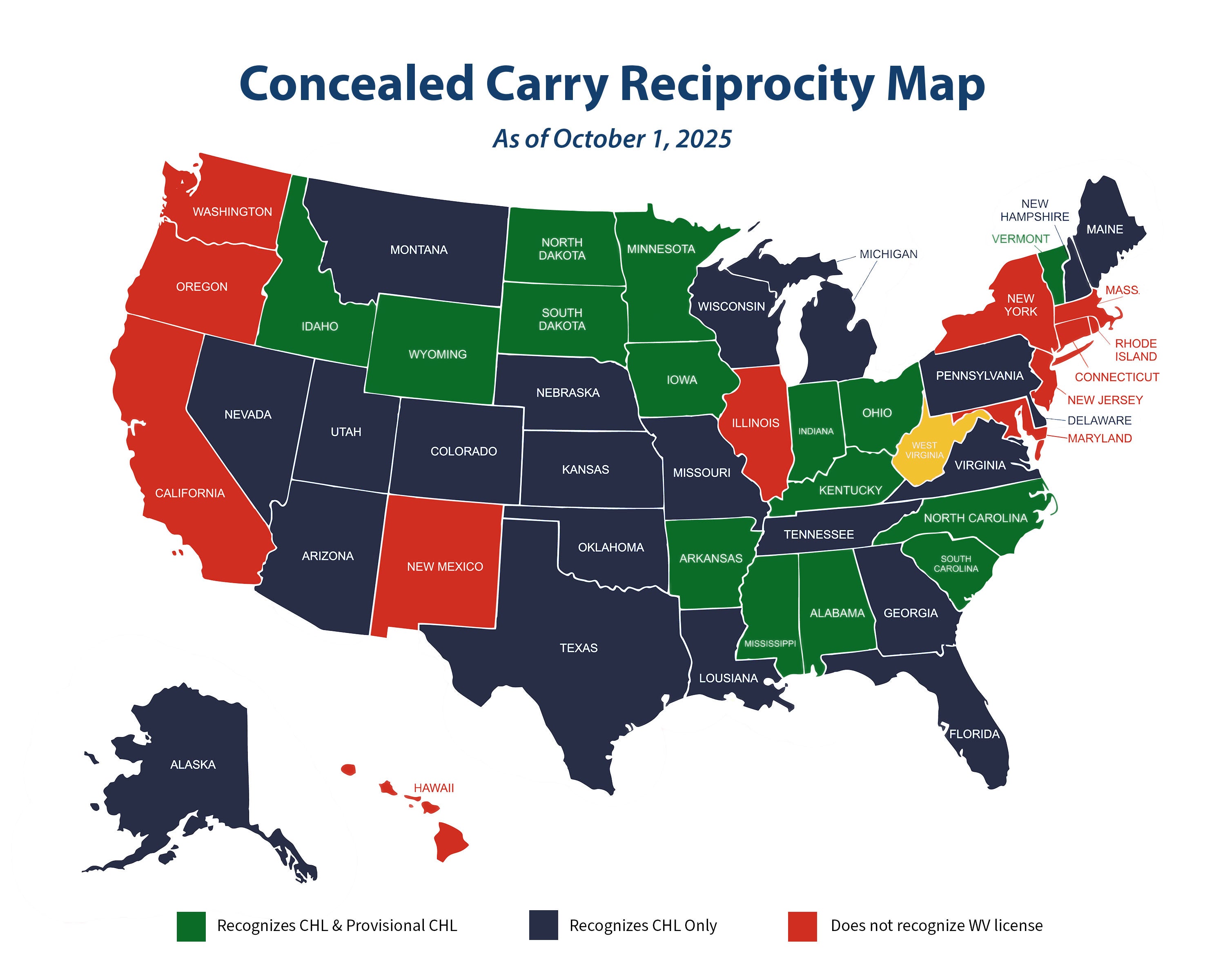
One of the most significant challenges for gun owners, especially those who travel, is understanding reciprocity laws. Just because your home state has constitutional carry doesn’t mean that right extends to other states. Reciprocity agreements are bilateral agreements between states that recognize each other’s permits (or lack thereof). However, these agreements can be complex and change frequently.
The US Concealed Carry Association (USCCA) provides a valuable resource for checking reciprocity laws: This map is regularly updated, but it’s always wise to double-check the laws of any state you plan to visit or travel through. Relying solely on a map can be risky, as laws can change quickly.
Federal law adds another layer of complexity. The Firearm Owners’ Protection Act (FOPA) of 1986 generally allows individuals to transport firearms across state lines for lawful purposes, such as hunting or competition. However, there are strict requirements. The firearm must be unloaded, and in a locked container. Additionally, the individual must comply with all applicable state and local laws at the destination.
Ignoring these laws can have serious consequences, ranging from fines and confiscation of the firearm to criminal charges. It's crucial to thoroughly research the laws of any state you're traveling through, even if you're just passing through. Don’t assume that your home state’s laws apply elsewhere. A little research can save you a lot of trouble.
- Verify reciprocity maps before crossing state lines.
- Ensure firearms are unloaded and in a locked container when transporting them across state lines.
- Comply with all applicable state and local laws at your destination.
- Be aware that reciprocity agreements can change, so always verify the current laws.
2026 Constitutional Carry States: Permitless Gun Laws by State (as of November 26, 2023)
| Constitutional Carry? | Age Requirement | Restrictions | Reciprocity Agreements | Effective Date |
|---|---|---|---|---|
| Yes | 21 | Certain locations prohibited, such as schools and government buildings. Restrictions may apply for individuals with specific felony convictions. | Varies, but generally includes many states with similar laws. | July 1, 2016 (Missouri) |
| Yes | 21 | Prohibited in establishments serving alcohol, police stations, and during active protests. | Numerous, with a focus on states recognizing similar permitless carry laws. | January 1, 2023 (Indiana) |
| Yes | 21 | Federal buildings, schools, and locations with posted signage prohibiting firearms. | Extensive, covering a significant portion of states with constitutional carry. | September 1, 2019 (Texas) |
| No | 21 (Permit Required) | Requires a permit for both open and concealed carry. Permits are not issued to individuals with certain criminal convictions. | Reciprocity varies significantly by state. | Varies by state |
| Yes | 18 | Restrictions apply to those with certain domestic violence convictions and active protection orders. | Limited, primarily to states with similar age requirements. | April 11, 2023 (Georgia) |
| Yes | 21 | Prohibited in courthouses, schools, and on school property. | Expanding, as more states adopt constitutional carry. | March 23, 2023 (South Carolina) |
| No | 21 (Permit Required) | Permit required; background checks and training are mandatory. | Reciprocity agreements dependent on individual state laws. | Varies by state |
| Yes | 21 | State and federal laws still apply. Individuals are prohibited from carrying in certain locations like airports. | Growing, but reciprocity is not universal. | October 1, 2023 (Alabama) |
Illustrative comparison based on the article research brief. Verify current pricing, limits, and product details in the official docs before relying on it.
The constitutional concealed carry reciprocity act
H.R.38 – the Constitutional Concealed Carry Reciprocity Act of 2025 – aims to create a national standard for concealed carry reciprocity. If passed, the Act would allow individuals with a valid concealed carry permit in one state to carry in any other state that does not prohibit concealed carry. This would effectively override the current patchwork of state laws and simplify the process for those who travel with a firearm.
As of late 2026, the bill has faced significant opposition in the Senate. Concerns have been raised about the potential impact on state sovereignty and the ability of states to regulate firearms within their borders. Opponents argue that a national standard would lower the bar for concealed carry and could lead to increased gun violence.
Proponents of the Act contend that it would protect the Second Amendment rights of law-abiding citizens and make it easier for them to travel and defend themselves. They point out that many states already have reciprocity agreements, and that the Act would simply expand those agreements nationwide. However, the bill’s future remains uncertain, and its passage is not guaranteed.
It’s important to remember that H.R.38 is not currently law. The situation is fluid, and the bill could be amended or stalled indefinitely. Gun owners should continue to stay informed about the status of the legislation and advocate for their rights.
Common Restrictions in Permitless Carry States
Even in states that have adopted constitutional carry, firearms are not entirely unregulated. There are almost always restrictions on who can carry, where you can carry, and sometimes even how you can carry. Understanding these limitations is crucial to avoid legal trouble.
One of the most common restrictions involves prohibited persons. Individuals convicted of felonies, domestic violence offenses, or certain other crimes are typically prohibited from possessing firearms, even in constitutional carry states. The specifics vary by state, but these restrictions are fairly consistent. Similarly, individuals with certain mental health conditions may also be prohibited from carrying.
Prohibited places are another common restriction. Schools, courthouses, government buildings, airports, and police stations are often off-limits, even in states with permitless carry. Some states also prohibit carrying in bars or establishments that serve alcohol. These restrictions are designed to prevent violence in sensitive locations.
Some states only allow open carry, meaning the gun must stay visible. Others allow concealed carry but require you to tell a police officer you're armed the moment you're stopped. Check the duty-to-inform laws before you holster up.al to research the specific laws of the state you’re in to ensure you’re in compliance.
Legal Considerations and Self-Defense
Using a firearm in self-defense is a serious matter with potentially life-altering legal consequences. Understanding the laws surrounding self-defense is crucial, but I must emphasize that I am not a lawyer and this information should not be considered legal advice. You should always consult with an attorney if you are involved in a self-defense situation.
One key distinction is between 'duty to retreat' and 'stand your ground' laws. In states with a duty to retreat, individuals are legally obligated to attempt to retreat from a dangerous situation before using deadly force. However, in stand your ground states, individuals have no duty to retreat and can use deadly force if they reasonably believe their life is in danger.
The legal aftermath of a self-defense shooting can be complex and expensive. You may face criminal charges, civil lawsuits, and intense scrutiny from law enforcement and the media. It’s essential to have legal representation as soon as possible. Understanding the specific self-defense laws in your state is paramount.
Furthermore, the concept of 'reasonable force' is critical. You are only legally justified in using the amount of force necessary to stop the threat. Using excessive force could lead to criminal charges. It’s important to be aware of your surroundings and to make informed decisions under pressure.
Training and Responsible Gun Ownership
Even in states where permits are no longer required, responsible gun ownership is paramount. Owning a firearm comes with a significant responsibility to ensure safety and to understand the laws. Proper training is essential for anyone who chooses to carry a firearm, regardless of whether it’s required by law.
Firearm safety courses teach individuals how to handle firearms safely, store them securely, and understand the principles of marksmanship. These courses can significantly reduce the risk of accidental shootings and promote responsible gun ownership. Many organizations offer firearm safety courses, including the National Rifle Association (NRA) and USCCA.
Proper storage is another critical aspect of responsible gun ownership. Firearms should be stored unloaded and in a secure location, inaccessible to children and unauthorized individuals. This helps to prevent accidental shootings, theft, and misuse of firearms.
Finally, it’s crucial to stay informed about state and local gun laws. Laws can change frequently, and it’s your responsibility to ensure you’re in compliance. Resources like the USCCA and state attorney general’s offices can provide up-to-date information.
- Take a firearm safety course.
- Store firearms securely, unloaded and inaccessible to unauthorized individuals.
- Stay informed about state and local gun laws.
- Practice safe handling and marksmanship.
Looking Ahead: Trends and Predictions
The trend toward constitutional carry shows no signs of slowing down. Several states are currently considering legislation that would eliminate permit requirements. This momentum is fueled by a growing number of gun rights advocates and a shifting political landscape. However, there will likely be continued resistance from gun control groups and some state legislatures.
One potential challenge is legal challenges to constitutional carry laws. Opponents argue that these laws violate the Second Amendment rights of others by making it easier for dangerous individuals to carry firearms. These legal battles could take years to resolve. Another challenge is ensuring that gun owners are adequately trained and informed about the laws.
I believe we’ll see more states adopting some form of permitless carry in the coming years, but the pace of change may slow as the issue becomes more politically contentious. The outcome of the federal reciprocity bill will also play a significant role in shaping the future of gun rights in the United States. It’s a complex issue with no easy answers.
Firearm Safety Resources
- National Rifle Association (NRA) - Offers a wide range of firearms training courses, including basic pistol, rifle, and personal protection classes. They also provide educational materials and advocate for responsible gun ownership.
- U.S. Concealed Carry Association (USCCA) - Provides self-defense training, concealed carry courses, and legal defense coverage for members. They focus on practical application and legal awareness.
- Bureau of Alcohol, Tobacco, Firearms and Explosives (ATF) - While not a training provider, the ATF offers resources on federal firearms laws and regulations. Understanding these laws is crucial for responsible gun ownership.
- State-Specific Firearms Associations - Many states have their own organizations dedicated to firearms education and advocacy. These groups often offer courses tailored to state-specific laws and requirements.
- Local Gun Ranges & Training Facilities - Numerous gun ranges and training facilities across the country provide introductory and advanced firearms courses. These can be a convenient option for hands-on training.
- Hunter Education Programs - Offered by state wildlife agencies, hunter education courses often include firearm safety training and are required for obtaining a hunting license. These courses are open to non-hunters in many states.
- Church Security Training - Several organizations offer training programs focused on security within places of worship, often including firearm safety and defensive tactics. These courses are geared towards responsible citizens protecting their communities.
No comments yet. Be the first to share your thoughts!