

Defining military-style firearms
The term 'assault weapon' is loaded, and its legal definition varies widely. Generally, it refers to semi-automatic firearms with military-style features. These aren't fully automatic weapons – meaning they don't fire multiple rounds with a single pull of the trigger – but they resemble rifles used by the military. The debate centers around whether these features contribute to the weapon’s lethality or simply its appearance.
Bans usually target adjustable stocks, pistol grips, flash suppressors, and barrel shrouds. Most definitions also include magazines holding more than ten rounds. H.R.3115, the 2025 federal proposal, names the AR-15 and AK-47 specifically. The semi-automatic mechanism itself is rarely the target, as many standard hunting rifles use the same self-loading action.
The phrase 'military-style' is often used, and it’s intentionally evocative. It aims to connect these firearms to the tools of war, implying a greater danger to the public. However, many argue this is a superficial connection, as the features are often cosmetic and don't fundamentally change the weapon’s function. The core of the debate isn’t usually about the mechanics of the firearm, but the perception of its intent and potential for harm.
Where bans stand now
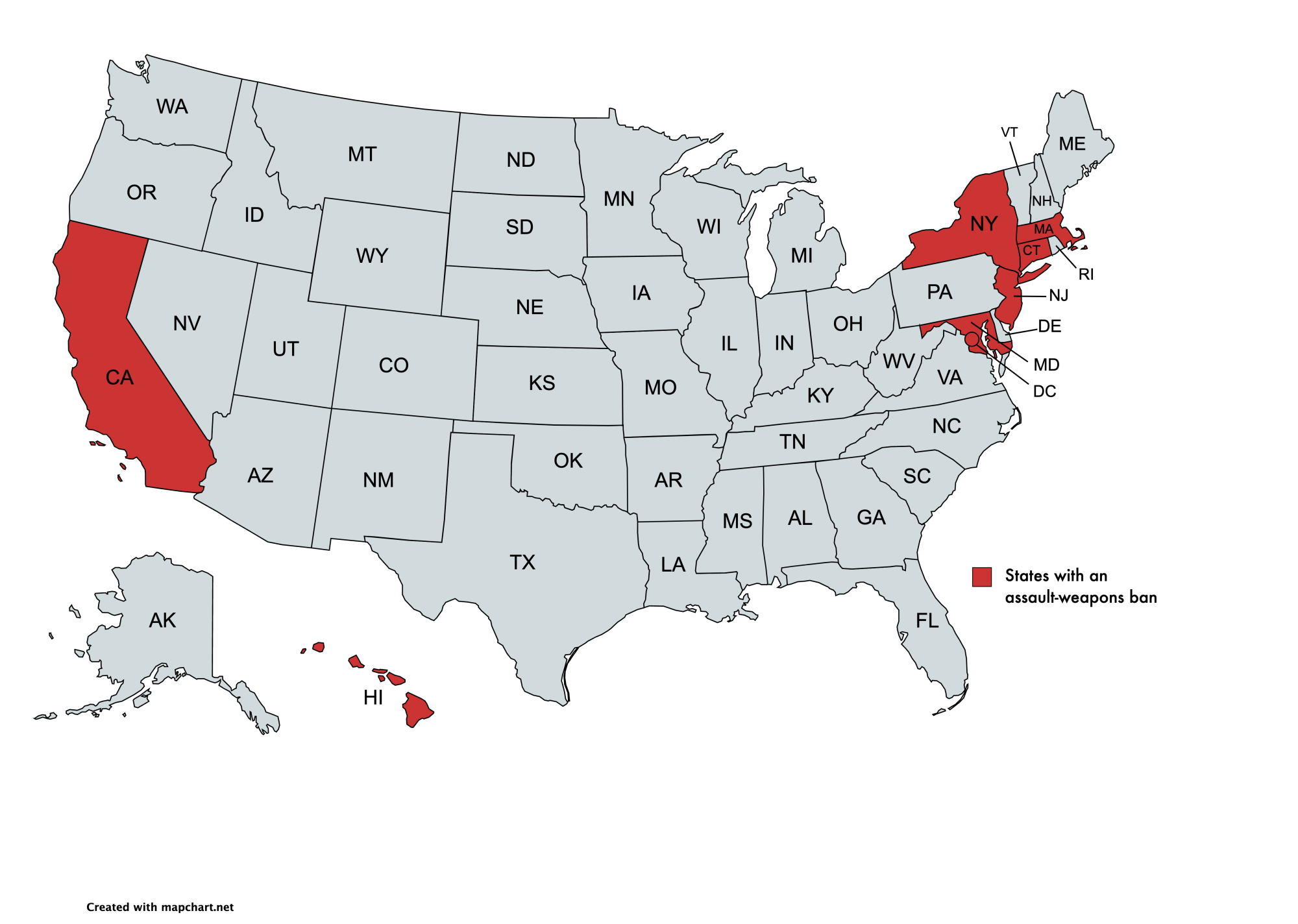
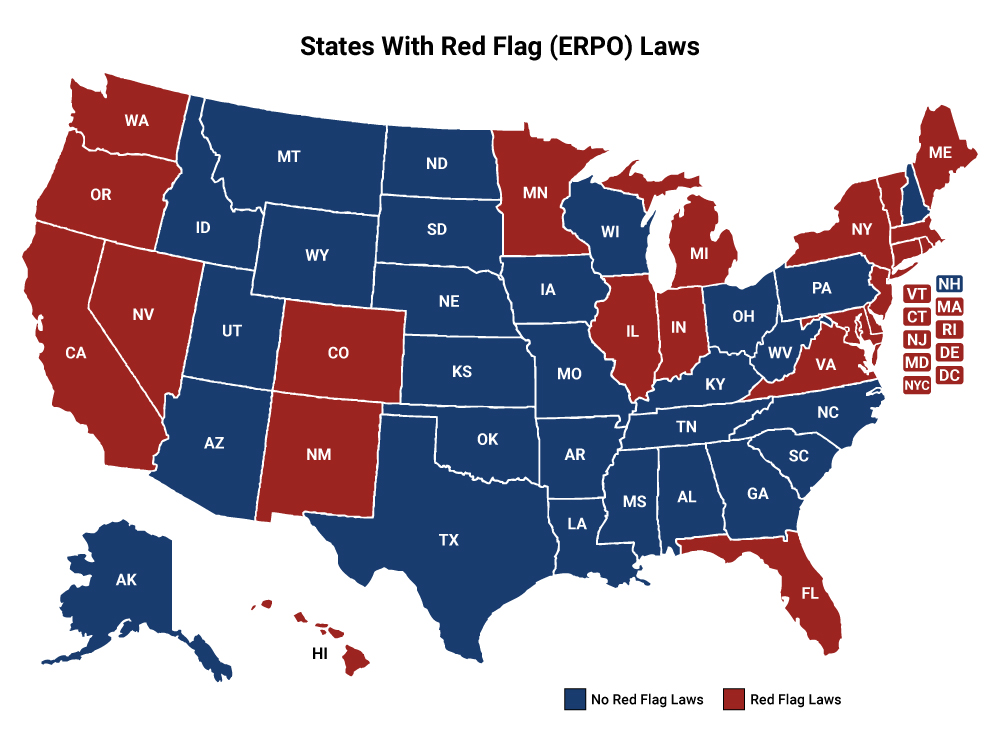
As of early 2025, a handful of states have enacted assault weapon bans. California, Connecticut, Delaware, Hawaii, Maryland, Massachusetts, New Jersey, New York, and Washington D.C. all have laws restricting these types of firearms. The specifics of these bans differ significantly. California's ban, for example, is quite comprehensive, prohibiting numerous models and features, while others are more limited.
States generally fall into three camps. California and New York have comprehensive bans on the sale and manufacture of specific models. Others use limited bans that only trigger based on a list of cosmetic features or manufacturing dates. Meanwhile, states like Texas and Arizona have no restrictions and have passed laws to preempt local bans.
Many of these bans have faced legal challenges, often based on Second Amendment grounds. For example, the Connecticut ban has seen multiple court battles. The effectiveness of these bans is also debated, with proponents arguing they reduce gun violence and opponents claiming they infringe on the rights of law-abiding citizens. Some bans include grandfathering clauses, allowing current owners to keep their firearms but prohibiting future sales.
- California bans specific models and features like pistol grips.
- Connecticut: Ban with ongoing legal challenges.
- Texas: No assault weapon ban.
- Washington D.C.: Comprehensive ban, including magazine capacity restrictions.
Assault Weapon Bans by State - 2026 (Projected)
| State | Ban Status | Key Features Banned (if applicable) | Effective Date | Legal Challenges |
|---|---|---|---|---|
| California | Comprehensive | Detachable magazines, pistol grips, flash suppressors, threaded barrels, bullet buttons. | 1989 (with subsequent amendments) | Yes - *https://www.ca9.uscourts.gov/opinions/view.php?filename=23-55373&pdf=1* |
| Connecticut | Comprehensive | Semi-automatic rifles with certain features, detachable magazines. | 2013 | Yes - *https://law.justia.com/cases/connecticut/connecticut-supreme-court/2019/2019-sc-000104.html* |
| Hawaii | Comprehensive | Assault weapons defined by specific features, large capacity magazines. | 2018 | Yes - *https://www.courthousenews.com/hawaii-supreme-court-upholds-assault-weapons-ban/* |
| Maryland | Comprehensive | Semi-automatic rifles with detachable magazines and other specified features. | 2013 | Yes - *https://www.baltimoresun.com/politics/bs-md-gun-ban-ruling-20240207-20240207-u764w6w7v5f45c7g56q6y4x64a.html* |
| Massachusetts | Comprehensive | Large capacity feeding devices, assault weapons defined by specific characteristics. | 1998 (with subsequent amendments) | Yes - *https://www.mass.gov/doc/supreme-judicial-court-decision-in-maura-healey-v-jesse-m-morgan/download* |
| New Jersey | Comprehensive | Assault firearms and large capacity magazines. | 2018 | Yes - *https://www.nj.gov/oag/newsreleases23/pr2023-07-28-assault-weapons-ban.pdf* |
| New York | Comprehensive | Semi-automatic rifles with detachable magazines and other specific features. | 2013 | Yes - *https://law.justia.com/cases/new-york/new-york-supreme-court/2023/2023-03058.html* |
| Washington | Limited | Certain semi-automatic rifles with detachable magazines. Ban focuses on specific makes and models. | 2023 | Yes - *https://apnews.com/article/washington-state-assault-weapons-ban-challenge-f9855179510c18f890e9f065a0998486* |
Illustrative comparison based on the article research brief. Verify current pricing, limits, and product details in the official docs before relying on it.
The 2025 federal proposal
H.R.3115, the proposed Assault Weapons Ban of 2025, aims to reinstate and expand upon the previous federal ban that expired in 2004. The bill prohibits the manufacture, sale, or transfer of certain semi-automatic assault weapons and large-capacity magazines. It specifically names several firearms, including the AR-15, AK-47, and similar variants.
The bill defines "assault weapon" based on a combination of features, including adjustable stocks, pistol grips, and barrel shrouds. It also restricts magazines that can hold more than ten rounds. The language is detailed, attempting to close loopholes that existed in the previous ban. However, some argue that the definition is still too broad and could encompass common hunting rifles.
The bill includes a grandfathering clause. Current owners could keep their rifles but would be barred from selling or transferring them to others. It also mandates specific storage requirements. This remains a proposal and is unlikely to pass the current divided Congress.
States protecting ownership rights
Conversely, several states are actively resisting further gun control measures. These states, typically with Republican-controlled legislatures and governors, prioritize Second Amendment rights and are unlikely to enact new assault weapon bans. Florida, Georgia, and South Carolina are prime examples.
These states have often passed legislation protecting gun rights, such as permitless carry laws and stand-your-ground legislation. Strong gun rights advocacy groups, like the National Rifle Association, are influential in these states and actively lobby against any new restrictions. Recent court decisions, like those interpreting the Second Amendment, have also emboldened these states to resist federal overreach.
It’s important to note that this is a politically charged issue and positions can shift. However, the current political climate in these states suggests a strong resistance to any new assault weapon bans in 2026. They're more likely to double down on existing gun rights protections.
The post-Bruen legal battle
Assault weapon bans have consistently faced legal challenges, primarily based on Second Amendment arguments. Gun rights advocates argue that these bans infringe on the right to bear arms for self-defense. Common arguments include the claim that assault weapons are 'in common use' and are therefore protected by the Second Amendment.
The 2022 Supreme Court ruling in Bruen changed the rules. Now, any gun restriction is unconstitutional unless the government can prove it fits within the nation's historical tradition of regulation. This has put every state ban in the crosshairs, as lawyers argue there is no 18th-century precedent for banning specific types of rifles.
Lower courts are currently grappling with the implications of Bruen. Some courts have struck down assault weapon bans, citing the lack of historical analogues. Others have upheld them, arguing they are consistent with long-standing regulations on dangerous and unusual weapons. The legal battle is far from over and will likely continue for years.
- The 2022 Bruen decision requires laws to have historical analogues.
- Challenges to Connecticut Ban: Ongoing legal battles based on Second Amendment rights.
- Lower Court Rulings: Mixed decisions on the legality of assault weapon bans.
Sales and violence data
The impact of assault weapon bans on gun sales and ownership is a complex question. Bans often lead to an initial surge in sales as individuals rush to purchase these firearms before they become illegal. After the implementation of a ban, sales of affected firearms typically decrease, but overall gun sales may remain stable or even increase.
Determining whether bans lead to a decrease in gun violence is even more challenging. It’s difficult to isolate the effect of a ban from other factors, such as socioeconomic conditions, mental health services, and other gun control laws. Data from the CDC and FBI shows fluctuations in gun violence rates, but attributing these changes to specific laws is problematic.
Some studies suggest that bans can reduce mass shooting fatalities, while others find no statistically significant effect. The evidence is inconclusive. I’m not sure about definitive conclusions here. The impact likely depends on the specific design of the ban, the level of enforcement, and the surrounding context.
No comments yet. Be the first to share your thoughts!