

How red flag laws work
Red flag laws, more formally known as Extreme Risk Protection Orders (ERPOs), are a relatively new and intensely debated approach to gun violence prevention. These laws allow temporary removal of firearms from individuals deemed to pose a significant danger to themselves or others. The core process generally involves a petition to a court, often by law enforcement, family members, or sometimes healthcare professionals, presenting evidence of dangerous behavior.
The idea isn’t to punish someone for a crime they’ve already committed, but to intervene before a tragedy happens. It's a preventative measure. However, this proactive nature is also the source of much controversy. Opponents raise concerns about due process rights and the potential for misuse, while proponents emphasize the potential to save lives. It’s a complex issue with deeply held beliefs on both sides.
State implementation varies wildly. While the core intent is similar, the rules for who can file a petition and how long a seizure lasts change the moment you cross state lines. As of late 2026, these differences define how accessible—or controversial—the laws are in practice.
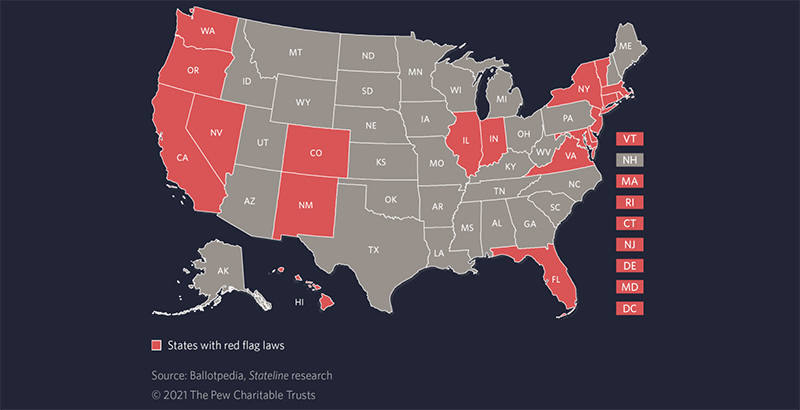
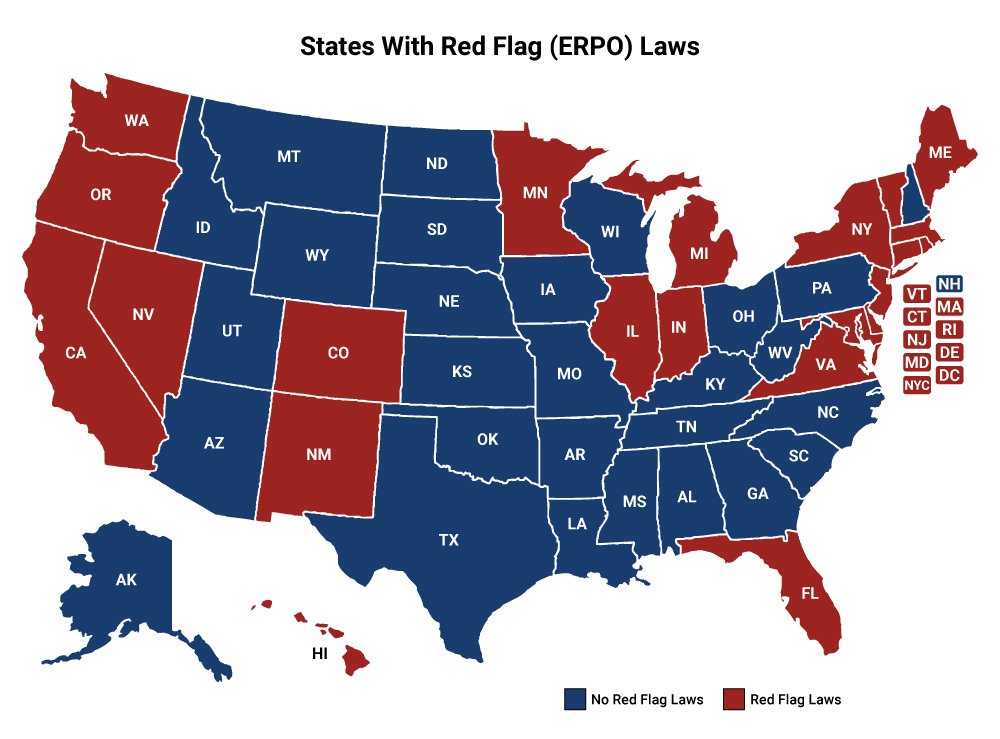
States with active laws in 2026
Twenty-one jurisdictions currently enforce red flag statutes. While the underlying principle is temporary removal based on risk, the legal triggers range from 'imminent danger' to 'probable cause.' These laws change frequently as state legislatures react to court rulings.
Here’s a state-by-state overview. Dates refer to when the law went into effect, and summaries are brief. For full details, consult the linked state legislation. Note that this list is based on data from firearminjury.umich.edu and everytownresearch.org, current as of November 2026. I've focused on providing a snapshot of the laws as they stand now, recognizing that legal interpretations can evolve.
California (2016): Allows law enforcement to petition for a Gun Violence Restraining Order. Requires a showing of credible threat. Orders last up to one year.
Colorado (2019): Permits law enforcement or family/household members to petition. Requires "reasonable cause" to believe the individual poses a significant risk. Orders can last up to 365 days.
Connecticut (2020): Allows law enforcement to petition based on a showing of imminent danger. Orders last up to 14 days initially, with potential for extension.
Delaware (2022): Permits law enforcement, and under certain circumstances, healthcare providers, to petition. Focuses on preventing self-harm or harm to others. Orders can last up to six months.
Florida (2018): Allows law enforcement to petition based on probable cause. Orders last up to 14 days initially, with potential for extension.
Hawaii (2019): Permits law enforcement to petition based on a showing of dangerous behavior. Orders last up to one year.
Illinois (2022): Allows law enforcement, family, and household members to petition. Requires a showing of "reasonable cause" to believe the individual poses a significant risk. Orders last up to 14 days initially, with possibility of renewal.
Indiana (2023): Allows law enforcement to petition. Orders last up to 30 days.
Maryland (2018): Permits law enforcement to petition based on a showing of imminent danger. Orders last up to 365 days.
Massachusetts (2018): Allows law enforcement to petition. Orders last up to 180 days.
New Jersey (2022): Permits law enforcement to petition. Orders last up to one year.
New York (2019): Allows law enforcement, school officials, and family members to petition. Orders last up to one year.
Oregon (2021): Permits law enforcement to petition based on a showing of imminent danger. Orders last up to 12 months.
Rhode Island (2022): Allows law enforcement to petition. Orders last up to one year.
Vermont (2019): Permits law enforcement to petition. Orders last up to 14 days initially, with possibility of extension.
Washington (2019): Allows law enforcement and family members to petition. Orders last up to one year.
Virginia (2020): Permits law enforcement to petition. Orders can last up to 180 days.
District of Columbia (2018): Allows law enforcement to petition. Orders last up to 365 days.
Red Flag Laws by State 2026: Extreme Risk Protection Orders
| State | Law Status | Effective Date | Petitioners | Order Duration | Link to Legislation |
|---|---|---|---|---|---|
| California | Yes | 2016 | Law enforcement, immediate family members | Up to one year | https://leginfo.legislature.ca.gov/faces/codes_displaySection.xhtml?lawCode=WIC§ionNum=6300 |
| Colorado | Yes | 2019 | Law enforcement, family members, household members | Up to one year, renewable | https://leg.colorado.gov/sites/default/files/crs2023-00138_20190322_001.pdf |
| Connecticut | Yes | 2013 | Law enforcement, qualifying family members | Up to one year | https://www.cga.ct.gov/2013/ACTS/PA/PA-13-069.htm |
| Delaware | Yes | 2018 | Law enforcement, qualifying family members | Up to one year | https://legis.delaware.gov/billdetail?legid=33870 |
| Florida | Yes | 2018 | Law enforcement, qualifying family members | Up to two years | http://www.myfloridalaw.com/statutes/chapter/790 |
| Hawaii | Yes | 2017 | Law enforcement, family members | Up to one year | https://www.capitol.hawaii.gov/docs/acts/ACT2017-0084.pdf |
| Illinois | Yes | 2018 | Law enforcement, family members | Up to six months, extendable for up to six months | https://www.ilga.gov/legislation/ilcs/ilcs5/725ILCS5/725ILCS5-145.htm |
| Indiana | No | N/A | N/A | N/A | N/A |
Illustrative comparison based on the article research brief. Verify current pricing, limits, and product details in the official docs before relying on it.
Differences in state enforcement
While the core idea behind red flag laws is consistent, the details vary considerably from state to state. These differences can significantly impact how the laws are applied and their potential effectiveness. One key area of variation is who can petition the court for an ERPO.
In some states, only law enforcement officers are authorized to file a petition. Others, like New York and Washington, expand this to include family or household members, and sometimes even school officials. This broader access can lead to more petitions, but also raises concerns about potential misuse based on personal disputes. The standard of evidence required to obtain an order also differs. Some states require 'probable cause,' a relatively low threshold, while others demand a higher showing of 'reasonable risk' or 'imminent danger'.
Due process protections are another crucial area of variation. Many states require a hearing before firearms are removed, allowing the individual to present their case. However, some laws allow for temporary removal based solely on the petition, with a full hearing scheduled later. The length of the order also varies, ranging from 14 days to one year, with some states allowing for renewals. These differing lengths impact the duration of the restriction on the individual’s Second Amendment rights.
Due process and legal pushback
A significant criticism of red flag laws centers on potential violations of due process rights guaranteed by the Fourteenth Amendment. Opponents argue that these laws allow for the seizure of property – firearms – without adequate opportunity for the individual to challenge the accusations against them. The right to confront accusers is a core tenet of the American legal system, and some argue that red flag laws circumvent this right.
Several legal challenges to red flag laws have been filed across the country, arguing that they violate the Second and Fourteenth Amendments. As of late 2026, the courts are still grappling with these issues. Some cases have been dismissed, while others are still pending appeal. A key question is whether the temporary nature of the orders and the availability of a subsequent hearing are sufficient to satisfy due process requirements.
The Supreme Court has not yet directly addressed the constitutionality of red flag laws. However, the outcome of lower court cases will likely shape the future of these laws. The debate is ongoing, and the legal landscape is constantly evolving. It’s important to note that the specifics of each law and how it’s applied can significantly affect its legal defensibility.
What the data shows
Determining the effectiveness of red flag laws is challenging. It’s difficult to establish a direct causal link between the implementation of these laws and a reduction in gun violence, suicide, or domestic violence. Many factors contribute to these complex issues, making it hard to isolate the impact of ERPOs. However, initial research offers some insights.
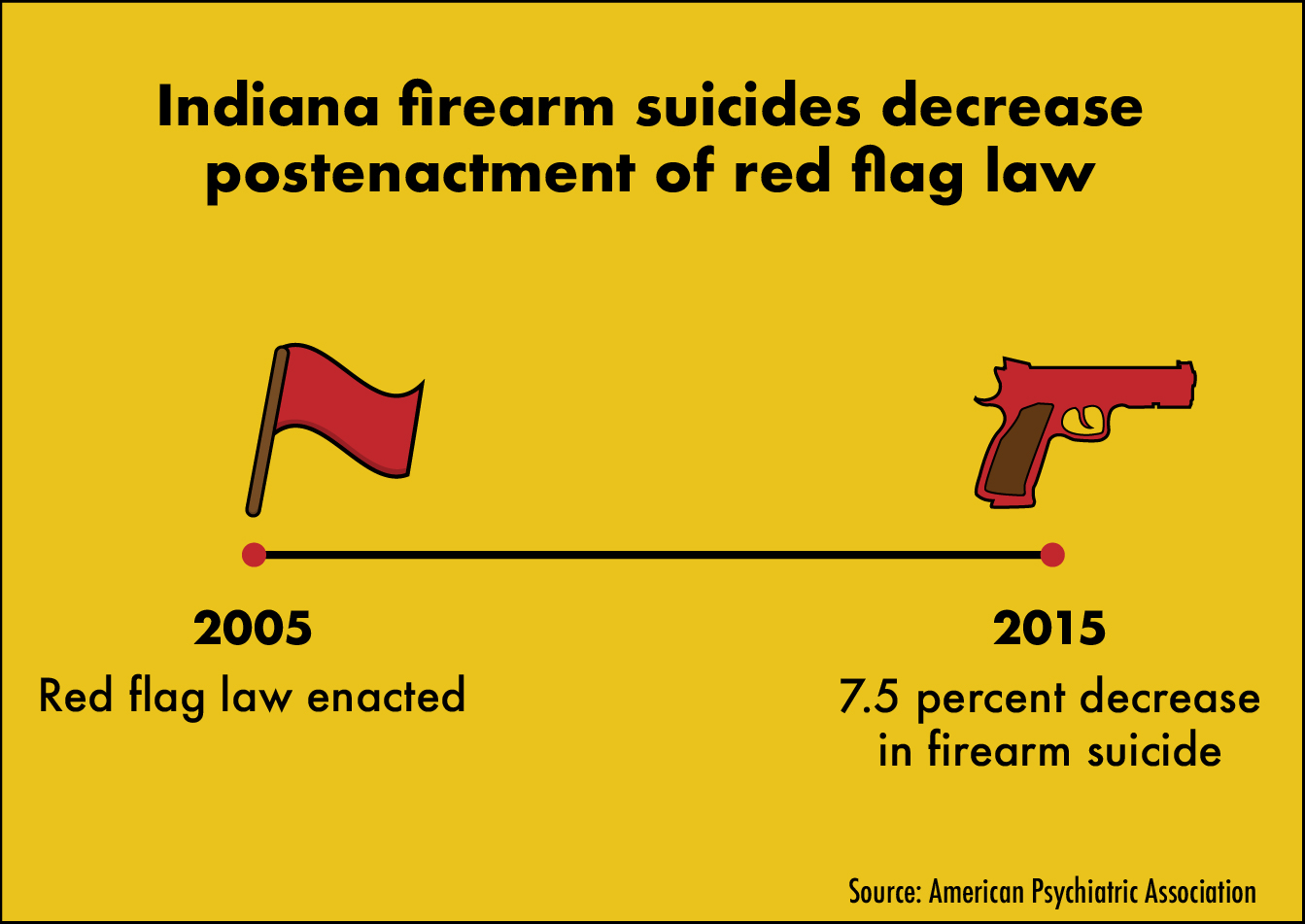
The University of Michigan’s Institute for Firearm Injury Prevention found in 2025 that these laws correlate with lower firearm suicide rates when procedures are clearly defined. Similarly, Everytown Research & Policy reports that the laws are frequently used in response to threats of mass violence, though the long-term impact on homicide rates remains harder to quantify.
However, the data is still limited, and there are methodological challenges. Correlation does not equal causation. It’s possible that states that enact red flag laws are also implementing other gun violence prevention measures, making it difficult to determine which interventions are most effective. More research is needed to fully understand the impact of these laws and identify best practices.
State ERPO Resources
- California - Information on Gun Violence Restraining Orders (GVROs), the state’s version of ERPOs, can be found on the California Courts website.
- Colorado - The Colorado Bureau of Investigation provides details regarding Extreme Risk Protection Orders, including eligibility and the process for filing.
- Connecticut - Connecticut’s Judicial Branch offers resources on Extreme Risk Protection Orders, including forms and frequently asked questions.
- Florida - The Florida Department of Law Enforcement provides information on Risk Protection Orders, including procedures and relevant statutes.
- Illinois - The Illinois General Assembly website details the state’s Extreme Risk Protection Order law and related legal information.
- Maryland - Maryland’s Judiciary website has a section dedicated to Extreme Risk Protective Orders, outlining the process and requirements.
- New Jersey - The New Jersey Courts website provides access to information and forms related to Extreme Risk Protective Orders.
- Washington - The Washington State Courts website offers details on Extreme Risk Protection Orders, including how to petition the court.
No comments yet. Be the first to share your thoughts!