

How red flag laws work
Red flag laws, or Extreme Risk Protection Orders (ERPOs), allow courts to temporarily take guns from people deemed a danger to themselves or others. These are civil orders, not criminal punishments, designed to prevent suicides and mass shootings before they happen.
The legal process generally begins with a petition to a court, typically filed by law enforcement or, in some states, family members and medical professionals. The petitioner must present evidence demonstrating that the individual in question presents a credible threat. This evidence might include threats of violence, evidence of domestic abuse, or a history of mental health crises.
Crucially, due process is supposed to be a key component. Individuals subject to an ERPO are generally entitled to a hearing where they can challenge the order and present their own evidence. However, the specifics of these hearings – and the standard of evidence required – vary significantly by state. The controversy surrounding these laws stems from concerns about potential violations of Second Amendment rights and the possibility of false accusations, so it’s a complex issue with strong opinions on both sides.
Differences in state enforcement
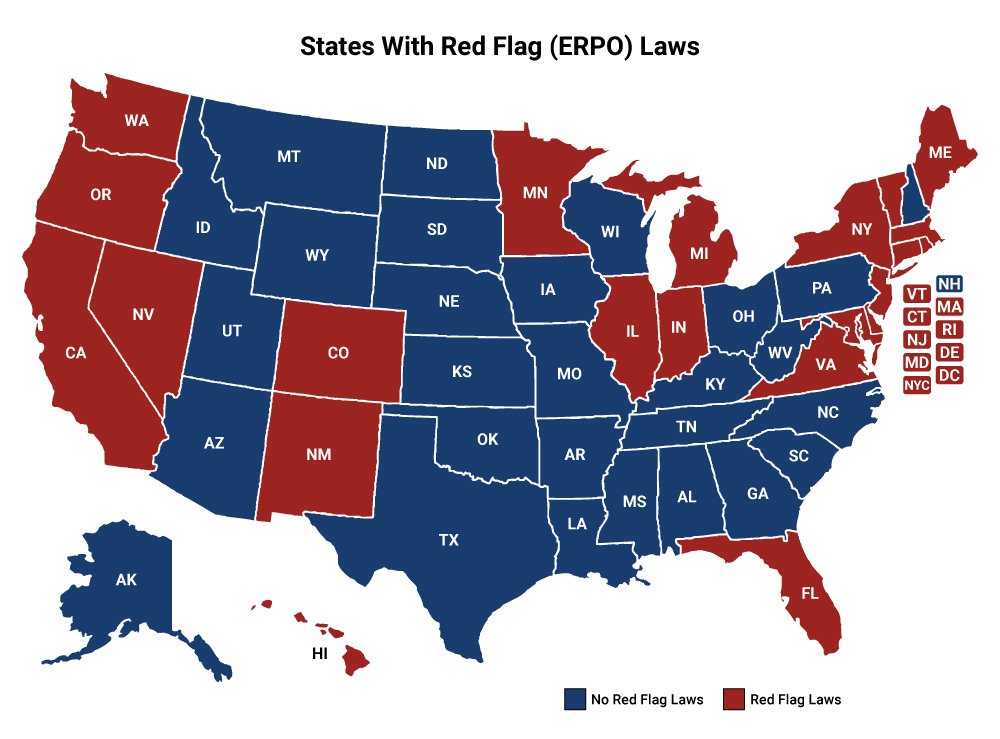
While the core principle of red flag laws remains consistent—temporary firearm removal based on perceived risk—the implementation details vary significantly. These differences can have a substantial impact on how the laws are applied and their potential effectiveness.
One crucial difference lies in who can petition the court. Some states, like Florida, restrict petitions to law enforcement only. Others, such as Colorado and Washington, allow family members or household members to petition as well. This impacts the likelihood of a petition being filed, as family members may be more aware of concerning behavior than law enforcement.
The standard of evidence required for issuing an order is another key differentiator. Some states require a "preponderance of the evidence’—meaning it’s more likely than not that the individual poses a threat. Others require a higher standard, such as ‘clear and convincing evidence." This affects the ease with which an order can be obtained. The initial duration of the order also varies, ranging from a few days to several weeks, with renewal processes differing widely.
Finally, the process for renewal is important. Some states require a full evidentiary hearing for each renewal, while others allow for extensions based on less stringent criteria. These variations highlight the lack of a uniform approach to red flag laws across the country. There is no one-size-fits-all solution.
Red Flag Laws by State 2026: Extreme Risk Protection Orders
| State | Law Status (Active/Inactive/Limited) | Enactment Date | Petitioners (Who can file?) | Evidence Standard |
|---|---|---|---|---|
| California | Active | 2015 | Law enforcement, immediate family members | Preponderance of the evidence |
| Colorado | Active | 2019 | Law enforcement | Clear and convincing evidence |
| Connecticut | Active | 2018 | Law enforcement, qualifying family members | Probable cause |
| Florida | Active | 2018 | Law enforcement, qualifying family members | Preponderance of the evidence |
| Illinois | Active | 2018 | Law enforcement, family or household members | Clear and convincing evidence |
| Maryland | Active | 2018 | Law enforcement | Probable cause |
| New Jersey | Active | 2018 | Law enforcement | Clear and convincing evidence |
| New York | Active | 2019 | Law enforcement, family members | Preponderance of the evidence |
Illustrative comparison based on the article research brief. Verify current pricing, limits, and product details in the official docs before relying on it.
Due process and legal challenges
A central concern surrounding red flag laws is whether they adequately protect due process rights. The Fifth and Fourteenth Amendments to the U.S. Constitution guarantee individuals the right to due process, including the right to a hearing and the right to counsel.
Critics argue that ERPOs can violate these rights by allowing for the seizure of firearms before an individual has a chance to present their case in court. While most laws include provisions for a hearing, the timing and scope of that hearing can be limited. The 2022 case Voisine v. United States addressed the issue of domestic violence and firearm possession, but didn’t directly tackle the core due process concerns surrounding ERPOs.
To address these concerns, many states have incorporated due process safeguards into their laws, such as requiring a prompt hearing, providing access to legal counsel, and allowing the individual to present evidence and cross-examine witnesses. However, the adequacy of these safeguards remains a subject of debate and ongoing legal challenges. Ensuring fair and equitable application of these laws is paramount.
Federal legislation and trends
At the federal level, there's been growing interest in incentivizing states to adopt red flag laws. H.R.223 - 119th Congress (2025-2026): Preventing Unjust Red Flag Laws Act of 2025, for example, aims to provide grants to states to implement and improve their ERPO programs. The goal is to encourage broader adoption and ensure that these laws are implemented effectively and with appropriate due process protections.
The bill’s stated aim is to address concerns about potential abuses of red flag laws, while still supporting efforts to reduce gun violence. However, it has faced opposition from groups who believe that any federal involvement in this area could infringe on Second Amendment rights. The outcome of this legislation remains uncertain.
While adoption surged after 2018, the pace has slowed as legal challenges reach state supreme courts. These cases usually focus on whether the initial seizure without a prior hearing violates the 14th Amendment.
Colorado's HB19-1177: A Case Study
Colorado’s HB19-1177 provides a useful case study for understanding how red flag laws function in practice. Enacted in 2019, the law allows law enforcement, family members, and household members to petition for an Extreme Risk Protection Order. The process involves an initial temporary order followed by a full hearing within 14 days.
Data from the Colorado Bureau of Investigation shows that, as of late 2025, hundreds of ERPOs have been issued statewide. While it’s difficult to definitively assess the law’s impact on gun violence, some studies suggest a correlation between the implementation of ERPOs and a decrease in suicide rates in certain counties. However, these findings are preliminary and require further research.
The implementation of HB19-1177 hasn’t been without controversy. Concerns have been raised about the potential for abuse and the fairness of the process. Some critics argue that the law doesn’t provide adequate due process protections, while others worry about the potential for false accusations. These concerns highlight the ongoing debate surrounding red flag laws and the need for careful monitoring and evaluation.
Looking Ahead: Potential Changes
The future of red flag laws is uncertain, but several trends suggest potential changes in the coming years. Increased federal involvement, through legislation like H.R.223, could incentivize more states to adopt these laws, but also potentially lead to standardized requirements and increased scrutiny.
We could also see further legal challenges to existing laws, particularly those related to due process concerns. Court decisions could shape the scope and application of these laws, potentially leading to amendments or repeals in some states. The political climate will undoubtedly play a role, with continued debate over gun control likely to influence the legislative landscape.
It’s also possible that we’ll see more sophisticated approaches to implementing red flag laws, such as incorporating mental health resources and support services into the process. The goal would be to address the underlying issues that contribute to gun violence, rather than simply removing firearms. Ultimately, the evolution of these laws will depend on a complex interplay of legal, political, and social factors.
Do you believe red flag laws (Extreme Risk Protection Orders) are an effective tool for preventing gun violence?
Red flag laws allow courts to temporarily remove firearms from individuals deemed a risk to themselves or others. As more states consider adopting these laws in 2026, we want to hear from our community. Vote below and share your perspective!

No comments yet. Be the first to share your thoughts!