

Extreme Risk Orders: A Quick Overview
"Red flag laws," or Extreme Risk Protection Orders (ERPOs), are a debated aspect of gun control laws in the United States. These laws provide a legal pathway for the temporary removal of firearms from individuals believed to pose a danger to themselves or others. They aim to intervene before violence occurs.
A misconception is that these laws simply 'take guns away.' While firearm removal is the outcome, the process involves judicial review and is temporary. The process begins with a petition, often filed with a court by law enforcement or, in some states, family members. If the court finds sufficient cause, a temporary order is issued, followed by a full hearing where the individual can present their case. This due process component is central to legal debates.
The legal basis for ERPOs stems from the state’s police power to enact laws protecting citizens' health, safety, and welfare. This clashes with Second Amendment rights, leading to legal challenges. Concerns about due process—the right to a fair hearing and legal representation—are paramount. It’s a balance between public safety and individual liberties, and courts are still determining the limits.
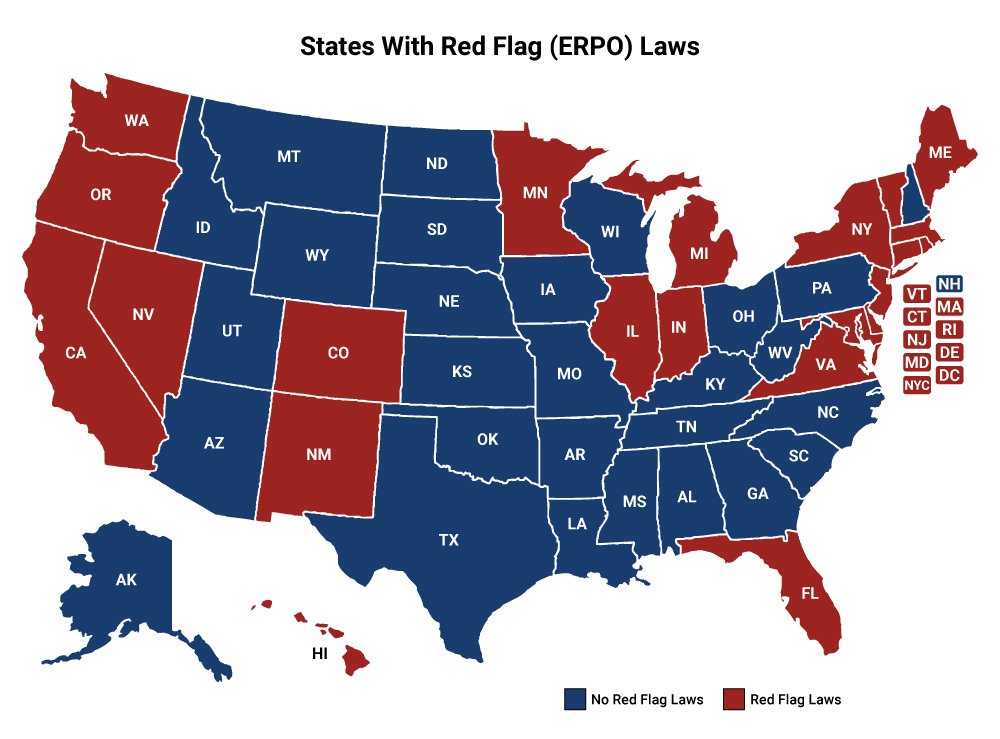
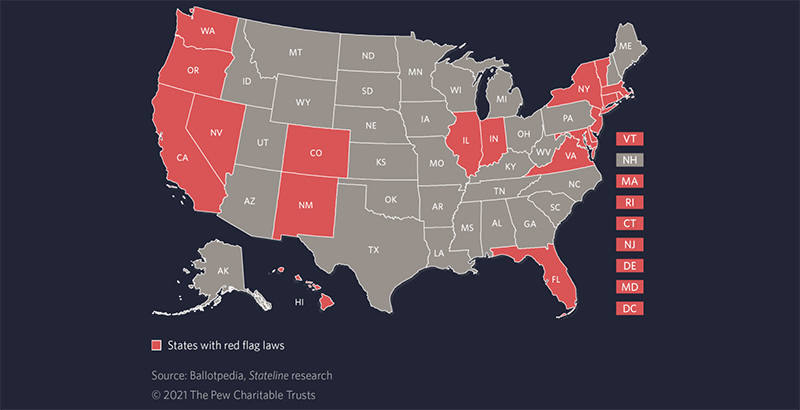
State-by-State ERPO Status (2026)
As of early 2026, 21 states and the District of Columbia have enacted some form of red flag law. The specifics vary significantly. States with ERPOs include California, Colorado, Connecticut, Delaware, Florida, Hawaii, Illinois, Indiana, Maryland, Massachusetts, New Jersey, New Mexico, New York, Oregon, Rhode Island, Vermont, Virginia, Washington, and Nevada. Each state’s law differs in who can petition, the required evidence standard, and order duration.
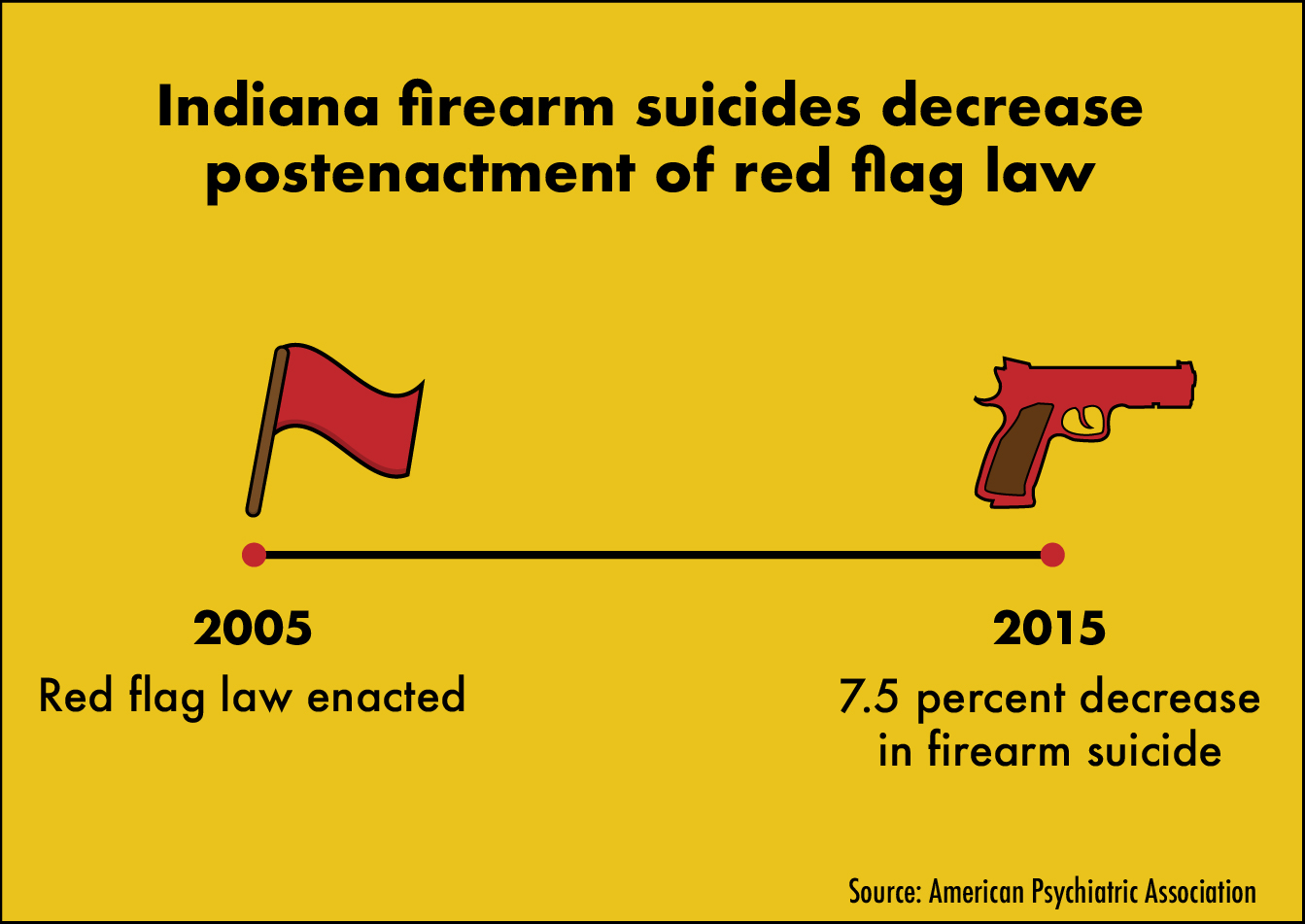
In California, law enforcement, employers, school administrators, and immediate family members can petition for an ERPO. The evidence standard is "reasonable suspicion’ that the individual poses a danger. Temporary orders last up to 21 days, followed by a full hearing. Indiana’s law, passed in 2023, allows only law enforcement to petition and requires a higher standard of proof. Florida"s law, expanded in 2023 after the Parkland shooting, has faced considerable debate and legal challenges. The USCCA notes that several states have amended their laws after initial enactment.
Texas and Arizona do not have red flag laws. Legislative attempts to pass ERPOs in these states have faced strong opposition from gun rights advocates. In Texas, bills proposing ERPOs have repeatedly stalled. North Carolina has considered alternatives, such as "safe storage" laws, which focus on preventing access to firearms by individuals at risk, rather than temporary removal. World Population Review data shows a division along political lines regarding the adoption of these laws.
The rate of new ERPO adoptions has slowed. While several states passed laws in 2023 and 2024, momentum decreased in 2025 and early 2026. This could be due to legal challenges and political polarization. States with existing laws also face legislative efforts to repeal or weaken them. Virginia is working to amend its ERPO law to add more due process protections.
Temporary order durations vary widely. Some states allow orders lasting only a few days, while others permit orders up to a year. Full hearing lengths also differ, with some states requiring a hearing within 14 days and others allowing up to 30 days. Penalties for violating an ERPO—possessing a firearm while under an order—typically involve felony charges and potential imprisonment. This is a serious offense with severe consequences.
Red Flag Laws by State 2026: Extreme Risk Protection Orders Explained
| ERPO Status | Petitioners | Order Duration (Temporary) | Due Process Protections | Notes |
|---|---|---|---|---|
| Yes | Law Enforcement, Family | 14 days | Medium | California was an early adopter of ERPO legislation, allowing both law enforcement and family members to petition for an order. |
| Yes | Law Enforcement | 14 days | Medium | Connecticut's law focuses primarily on law enforcement petitions, with a temporary order lasting up to 14 days. |
| Yes | Law Enforcement, Family | 7-28 days | Medium | Florida allows both law enforcement and family members to petition, with a variable temporary order duration depending on the county. |
| Yes | Law Enforcement, Family | 60 days | High | Indiana’s law includes provisions for respondents to present evidence at a hearing and requires a higher standard of proof. |
| Yes | Law Enforcement | 21 days | Medium | Maryland’s law allows only law enforcement to petition for an ERPO, with a temporary order lasting up to 21 days. |
| Yes | Law Enforcement, Family | 10 days | Medium | New Jersey permits petitions from both law enforcement and family members. The initial temporary order is 10 days. |
| Yes | Law Enforcement, Family | 14 days | Medium | Washington State allows both law enforcement and family members to petition, with a 14-day temporary order. |
| Limited | Law Enforcement | Varies | Low | Texas has a limited 'red flag' law focused on domestic violence situations, allowing for temporary removal of firearms in specific cases. |
Illustrative comparison based on the article research brief. Verify current pricing, limits, and product details in the official docs before relying on it.
Who Can Petition for an ERPO?
Who can petition for an ERPO varies significantly by state. Some states, like Indiana, strictly limit petitions to law enforcement agencies. This approach ensures petitions are based on professional assessments and evidence from official investigations. Others, like California and Maryland, allow a wider range of individuals to petition, including family members, household members, and school officials.
Broader petitioning access allows individuals with close personal knowledge of the person at risk to raise concerns. Family members may notice warning signs or behavior changes first. However, this also raises concerns about potential misuse or false accusations. A disgruntled ex-spouse, for example, could file a petition based on unsubstantiated claims. Clear and robust due process protections are essential.
Petitions filed by family members have been successfully challenged in court due to lack of evidence. In a 2024 case in Connecticut, a temporary ERPO was overturned after the individual showed the petition was based on a misunderstanding of his statements. These cases highlight the need for a thorough and impartial judicial review process. Courts are continually refining their approach to these petitions.
The Evidence Standard: What's Enough?
The required evidence to obtain a temporary ERPO is contentious. States employ different standards, ranging from "reasonable suspicion’ to ‘probable cause’ to ‘clear and convincing evidence.’ ‘Reasonable suspicion’ is the lowest standard, requiring minimal evidence to suggest the individual may pose a danger. ‘Probable cause’ requires more certainty, while ‘clear and convincing evidence" is the most demanding, requiring a high probability that the individual is a danger.
Evidence typically considered includes threats of violence, recent violent acts, documented mental health concerns, and substance abuse. A credible threat on social media, a history of domestic violence, or a recent psychiatric hospitalization could be considered evidence. Simply having a mental health condition is not sufficient grounds for an ERPO. The focus must be on specific behaviors and threats, not a diagnosis alone.
ERPOs could be used to disarm individuals based on unsubstantiated claims. Courts must carefully scrutinize evidence and ensure petitions are not based on hearsay or speculation. Everytown Research & Policy emphasizes focusing on behaviors indicating an imminent threat, rather than generalizations or stereotypes. The evidence standard is the first defense against potential abuses.
Due Process and Legal Challenges
Due process concerns are central to legal challenges surrounding ERPOs. Opponents argue these laws violate the Second Amendment right to bear arms and the Fourteenth Amendment’s due process clause, which guarantees a fair hearing before the government can deprive someone of their property. Temporarily seizing firearms without a full hearing constitutes an unlawful seizure.
Critics also contend that ERPOs can be used to harass or intimidate gun owners, and that they create a chilling effect on the exercise of Second Amendment rights. They argue that the low standard of evidence in some states allows for the issuance of orders based on flimsy or unsubstantiated claims. The USCCA has been a leading voice in challenging the constitutionality of these laws.
Several key court cases have addressed these concerns. In Redmond v. Perry (2023), a federal court in Washington state upheld the state’s ERPO law, finding that it did not violate the Second Amendment. However, the court also emphasized the importance of providing robust due process protections. Other cases are still pending, and the legal landscape is likely to continue to evolve. The Supreme Court has not yet taken up a major case on ERPOs, but it remains a possibility.
ERPOs and Mental Health
The intersection of ERPOs and mental health is often misunderstood. While mental health concerns can be a factor in ERPO petitions, it’s crucial to avoid stigmatizing individuals with mental health conditions. Having a mental health diagnosis does not automatically make someone a danger to themselves or others. The focus should be on specific behaviors and threats, not on a diagnosis.
The role of mental health professionals in the ERPO process is complex. Some states require a mental health evaluation before an ERPO can be issued, while others do not. This raises ethical considerations for mental health professionals, who must balance their duty to protect public safety with their obligation to protect patient confidentiality. It’s a difficult position to be in.
I believe it’s important to emphasize that ERPOs should be used as a last resort, and that alternative interventions, such as voluntary mental health treatment, should be explored whenever possible. Simply removing someone’s firearms does not address the underlying issues that may be contributing to their risk of violence. A comprehensive approach that includes mental health support is essential.
Mental Health Resources
- National Suicide Prevention Lifeline - Provides 24/7, free and confidential support for people in distress, prevention and crisis resources, and best practices in suicide prevention.
- Crisis Text Line - Offers free, 24/7 crisis support via text message. Text HOME to 741741 to connect with a crisis counselor.
- The Trevor Project - Focused on suicide prevention efforts among lesbian, gay, bisexual, transgender, queer & questioning (LGBTQ) young people. Offers phone, text, and online chat support.
- NAMI (National Alliance on Mental Illness) - A grassroots mental health organization dedicated to building better lives for the millions of Americans affected by mental illness. Provides information, support, and advocacy.
- SAMHSA’s National Helpline - A confidential, free, 24/7 information service, in English and Spanish, providing referrals to local treatment facilities, support groups, and community-based organizations.
- The 988 Suicide & Crisis Lifeline - Dial or text 988 in the US and Canada to connect with trained crisis counselors. It is available 24/7, free, and confidential.
Looking Ahead: Trends in 2026
The future of red flag laws is uncertain. While the initial wave of adoptions has slowed, it’s likely that more states will consider ERPOs in the coming years, particularly in the wake of high-profile shootings. However, the growing number of legal challenges and political opposition could also lead to efforts to repeal or weaken existing laws.
Recent Supreme Court decisions on gun rights, such as New York State Rifle & Pistol Association, Inc. v. Bruen (2022), could also have a significant impact on the future of ERPOs. The Court’s emphasis on historical tradition could lead to stricter scrutiny of these laws. It’s a rapidly evolving legal landscape, and the outcome is far from certain. The debate over red flag laws will undoubtedly continue for years to come.

No comments yet. Be the first to share your thoughts!