

The reality of gun storage
Owning a gun legally is only half the job. If it isn't locked up, it's a liability. We see the results of unsecured weapons in local news every week—accidental shootings and stolen handguns that end up on the street. These aren't just statistics; they are preventable tragedies.
It’s a deeply emotional subject, and it’s vital to recognize that. Beyond the legal requirements, there’s a moral imperative to prevent harm. Safe gun storage isn’t just about avoiding legal trouble – it’s about protecting lives, both those of loved ones and the wider public. I believe we all share a responsibility to prioritize firearm safety.
The Department of Justice reports that thousands of guns used in crimes were originally stolen from legal owners who didn't lock them up. It is a simple equation: unsecured guns are easier to steal and more likely to go off in the wrong hands.
Federal guidelines are just a baseline
While there isn't a federal law mandating specific gun storage practices, the ATF and Department of Justice offer clear recommendations. The core message is simple: 'Unload It, Lock It, Store It.' This means unloading the firearm, securing it with a locking device, and storing it in a safe and secure location.
Federal 'safety' is a low bar. A simple cable lock or a plastic trigger guard meets the criteria. These are suggestions to keep the gun from firing, but they aren't laws in most states. You won't go to federal prison for ignoring them, though you might lose a negligence lawsuit later.
Failing to adhere to these guidelines doesn't automatically carry legal consequences at the federal level. However, it could be used as evidence of negligence in a civil lawsuit if a firearm is misused after being improperly stored. The ATF’s publication ATF2022L-10 details these considerations for Federal Firearms Licensees, but the principles apply to all gun owners.
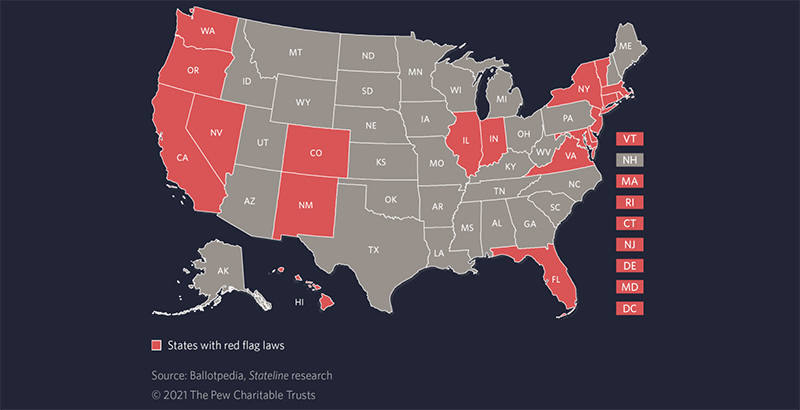
State-by-State Safe Storage Laws: A Map
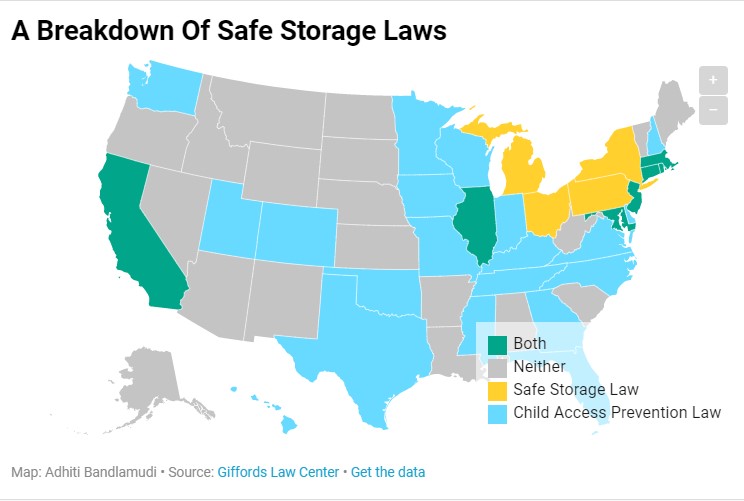
Gun storage laws vary dramatically across the country. As of late 2023, according to Everytown Research & Policy, 16 states and the District of Columbia have laws requiring guns to be stored locked. Two states, Massachusetts and Oregon, require trigger locks to accompany gun purchases. Nine states have laws addressing negligent storage, but the specifics differ widely.
Here's a broad overview, but always check your specific state and local laws. California has some of the most stringent requirements, mandating locked storage and establishing civil liability for negligent storage. New York also has strong laws, requiring firearms to be secured when not in use. Florida has laws related to child access prevention, imposing penalties if a child gains access to a firearm and causes harm.
Conversely, many states have no specific laws regarding safe storage. This means that while federal guidelines apply, there’s no state-level mandate to lock up firearms. This includes states like Alabama, Alaska, Arizona, Kansas, and Wyoming. It’s crucial to be aware of this disparity and to practice responsible storage regardless of the legal requirements.
Here’s a quick breakdown by category:
States with mandatory storage laws (e.g., California, New York, Massachusetts)
States with child access prevention laws (e.g., Florida, Texas)
States with no specific storage laws (e.g., Alabama, Alaska, Arizona)
- California, New York, and Massachusetts mandate locked storage.
- New York: Strong storage requirements, emphasis on safe handling.
- Massachusetts & Oregon: Trigger locks required with purchase.
- Florida & Texas: Child access prevention laws in place.
- Alabama, Alaska, Arizona, Kansas, Wyoming: No specific storage laws.
State Gun Storage Laws - 2026
| State | Mandatory Storage Law (Yes/No) | Child Access Prevention Law (Yes/No) | Penalty for Negligent Storage | Resources |
|---|---|---|---|---|
| California | Yes | Yes | Civil liability and potential criminal charges for making a firearm accessible to a minor resulting in injury or death. | https://leginfo.legislature.ca.gov/faces/codes_displaySection.xhtml?lawCode=PEN§ionNum=25100 |
| Connecticut | Yes | Yes | Class D felony for failing to keep a loaded firearm locked or stored with a trigger lock if a minor obtains it and uses it to cause injury. | https://www.cga.ct.gov/2023/POF/2023POF00001-R000000000-POF.htm |
| Massachusetts | Yes | Yes | Criminal penalty of up to one year in jail and a $1,000 fine for negligent storage if a minor gains access and causes harm. | https://www.mass.gov/doc/chapter-140-section-131l-safe-storage-of-firearms/download |
| New Jersey | Yes | Yes | Disorderly persons offense with a fine of up to $1,000 for negligently leaving a firearm accessible to unauthorized individuals, including minors. | https://www.njleg.state.nj.us/bills/OL2022/2A4771.htm |
| Oregon | Yes | Yes | Civil liability for damages resulting from unauthorized access and use of a firearm by a minor. Potential criminal charges depending on the circumstances. | https://olis.oregonlegislature.gov/liz/2023R1/Downloads/MeasureDocument/HB2510 |
| Illinois | Yes | Yes | Class A misdemeanor for failing to safely store a firearm, potentially escalating to a felony if a minor gains access and uses it unlawfully. | https://www.ilga.gov/legislation/ilcs/ilcs5/720ILCS5/720ILCS5-Art24.htm |
| New York | Yes | Yes | Criminal penalty of up to one year in jail for leaving a loaded firearm unsecured and accessible to a person under 16. | https://www.nysenate.gov/legislation/laws/PEN/article-265 |
| Maryland | Yes | Yes | Up to 3 years imprisonment and/or a $5,000 fine for negligently storing a regulated firearm if accessed by a prohibited person, including a minor. | https://mga.maryland.gov/mgawebsite/Legislation/Details/HB0866?ys=2023RS |
Illustrative comparison based on the article research brief. Verify current pricing, limits, and product details in the official docs before relying on it.
Keeping guns away from children
Laws related to child access prevention (CAP) are designed to prevent tragedies. These laws generally impose criminal penalties on gun owners if a child gains access to a firearm and uses it to cause harm, even if the gun owner wasn't intentionally negligent. The concept of 'negligent entrustment' is central to these laws.
Negligent entrustment means knowingly allowing a firearm to be accessible to someone who poses a risk of harm. This could include a child, someone with a history of mental illness, or someone prohibited from possessing a firearm. The penalties for violating CAP laws can be severe, including felony charges and significant prison time.
I’ve read reports of cases where a child found an unsecured firearm and accidentally shot themselves or another person. These situations are heartbreaking and serve as a stark reminder of the importance of safe storage. While I won’t share specific details that could identify individuals, these incidents demonstrate the real-world consequences of irresponsible gun ownership.
Fines and legal consequences
The penalties for violating gun storage laws vary significantly depending on the state. In states with mandatory storage laws, failure to comply can result in fines ranging from a few hundred dollars to several thousand dollars. Some states also impose jail time, particularly for repeat offenders.
Beyond criminal penalties, gun owners also face the risk of civil liability. If a firearm is stolen or misused due to negligent storage, the gun owner could be sued by the victim or their family. Lawsuits can seek damages for medical expenses, lost wages, pain and suffering, and other losses.
In some cases, a conviction for violating gun storage laws can result in the loss of gun ownership rights. This means the individual may be prohibited from purchasing or possessing firearms in the future. It’s a serious consequence that underscores the importance of understanding and complying with all applicable laws.
Storage Options: Beyond the Basic Lock
Basic cable locks and trigger locks are a good starting point, and relatively inexpensive. However, they may not provide the highest level of security. A full-sized gun safe offers significantly greater protection against theft and unauthorized access. Prices for gun safes vary widely, from a few hundred dollars for a basic model to several thousand dollars for a high-end safe.
Quick-access safes are also available, designed to allow gun owners to quickly access their firearms in the event of a home invasion or other emergency. These safes typically use biometric scanners or keypads for access. They offer a balance between security and convenience.
Smart gun technology is another emerging option. These firearms use technology to prevent unauthorized use, such as requiring a fingerprint scan or PIN code to operate. While still controversial, smart guns could potentially reduce the risk of accidental shootings and suicides. I think it's a space worth watching, but it's not a widespread solution yet.
Recent Changes and Upcoming Legislation
Several states have seen changes to their gun storage laws in recent years. For example, Colorado passed a law in 2023 requiring gun owners to report lost or stolen firearms. Other states are considering legislation that would mandate safe storage or impose stricter penalties for negligent storage.
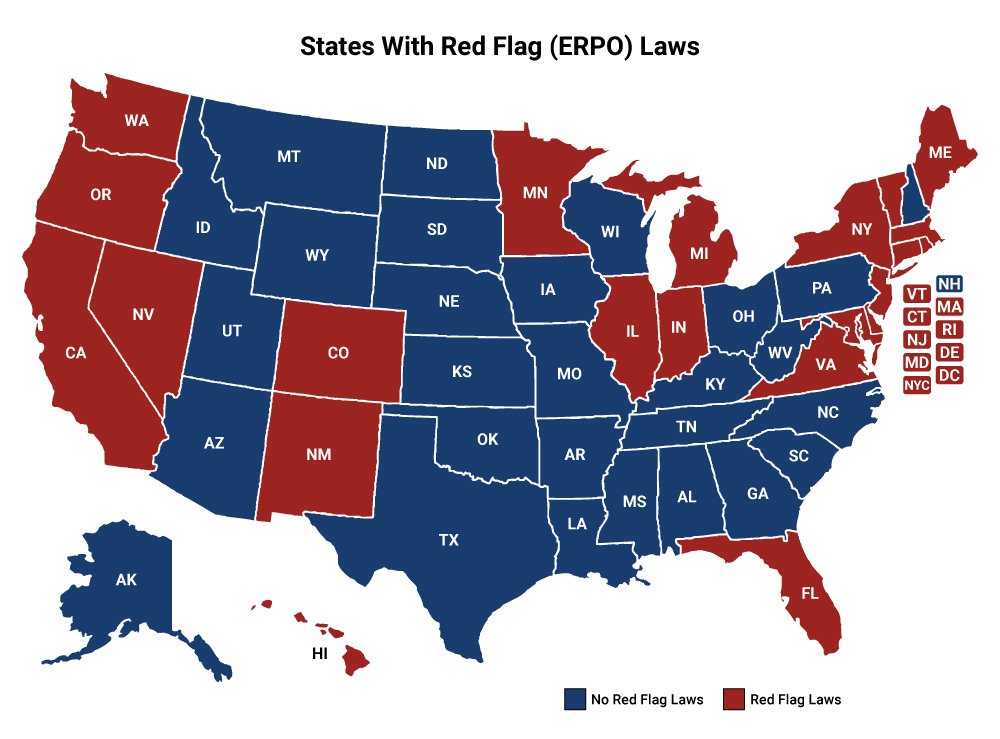
By 2026, expect more states to follow Colorado and Michigan's lead. The momentum is clearly behind mandatory storage and stricter child access penalties. Even if your state is quiet now, new red flag laws often change the requirements for how you keep your collection at home.
It’s important to stay informed about these changes. Keep an eye on your state legislature and follow news reports from reputable sources. Gun laws are constantly evolving, and it’s crucial to be aware of your rights and responsibilities.
No comments yet. Be the first to share your thoughts!